Opening a salon doesn’t require a six-figure interior design budget. Smart color choices, strategic lighting, and thoughtful sourcing can create a polished, professional space that clients love walking into, without very costly. This guide walks through nine practical strategies for designing a low-budget beauty salon interior that feels upscale and welcoming. Whether starting from scratch or refreshing an existing space, these tactics focus on what actually moves the needle: strategic color, smart layouts, affordable fixtures, and meticulous cleanliness. The result is a salon that competes on professionalism and atmosphere, not spending power.
Table of Contents
ToggleKey Takeaways
- Strategic color choices, warm LED lighting (2700K), and layered fixtures transform low budget beauty salon interior design without expensive renovations.
- Vertical storage solutions like open shelving and wall-mounted pegboards maximize space efficiency while keeping supplies visible and accessible in compact salons.
- Source salon furniture from wholesale beauty suppliers, liquidation sales, and second-hand marketplaces to save 30–70% compared to retail pricing.
- Daily cleanliness routines and organized labeling systems matter more than expensive finishes—spotless spaces outperform messy high-end designs.
- Prioritize spending on styling chairs, mirrors, and lighting where clients spend the most time, while cutting costs on trendy decor and non-essential accessories.
- Multi-functional furniture with built-in storage, neutral textiles, and personal touches like client testimonials fill space with meaning rather than expense.
Start With Strategic Color and Lighting Choices
Color and light are the two cheapest tools in your arsenal. A fresh coat of paint costs pennies compared to furniture, but it completely redefines a space. Soft neutral backgrounds, warm whites, soft grays, or muted taupes, create a calming backdrop that works with any decor and keeps the focus on clients during treatments.
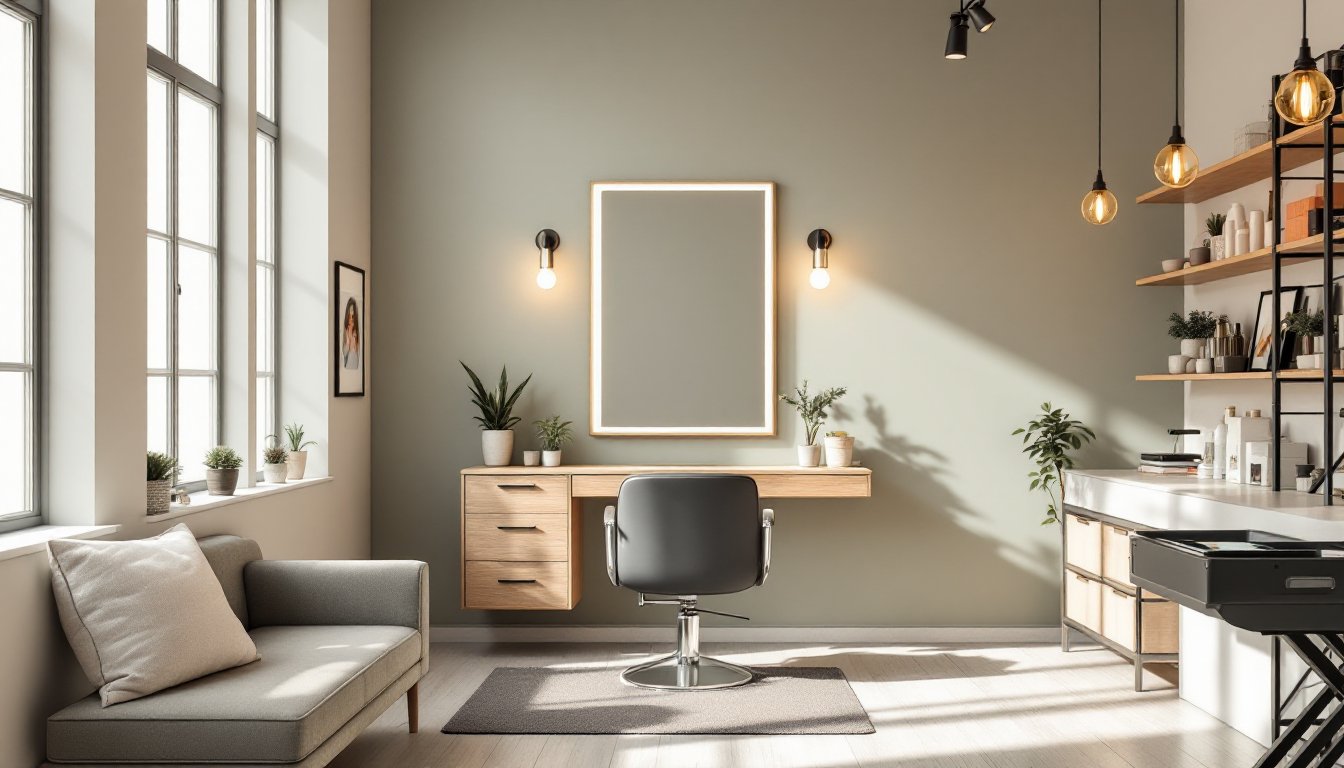
Accent walls are budget-friendly visual wins. A single wall in a muted sage, soft blue, or blush adds sophistication without overwhelming the space. Keep accent colors muted rather than bright: vibrant walls can feel chaotic in a salon where people seek relaxation.
Lighting matters more than most salon owners realize. Harsh fluorescent overhead lighting screams “corporate office,” not “welcoming sanctuary.” Swap out standard fixtures for warm LED bulbs (2700K color temperature) and add layered lighting: ceiling fixtures, sconces, and task lights over stations. Wall sconces flanking mirrors provide flattering light for makeup or consultations and cost under $30 per fixture from budget-friendly retailers. Good lighting is one of the first things clients notice, and it costs far less than any piece of furniture.
Mirrors amplify both light and perceived space. Strategic mirror placement behind reception areas or along walls makes even cramped salons feel airier and brighter. Consider frameless mirrors or affordable wood-framed options from big-box stores rather than custom installations.
Maximize Space With Smart Layout and Storage Solutions
Layout determines whether a salon feels efficient or cramped. Before buying anything, map out stations and traffic flow. Stylists need elbow room around chairs, and clients need a clear path from entrance to waiting area to stations. Tight, awkward layouts frustrate both.
Vertical storage is a game-changer on tight budgets. Open shelving (2-3 feet above counter height) holds color bottles, shampoos, and towels while keeping them visible and accessible. Industrial metal shelving units cost $80–150 and hold far more than built-in cabinets costing thousands. Wall-mounted pegboards above stations let stylists organize tools and supplies without consuming floor or counter space.
Multi-functional furniture saves money and space. A styling station with built-in storage beats separate cart + shelf combinations. Look for pieces designed for salons or barbershops rather than generic office furniture: they’re often cheaper and better proportioned for the work. Waiting area seating should double as storage, benches with lift-tops or ottomans with hidden compartments hide clutter while seating guests.
Clear zones through layout, not walls. Group all washing stations together, designate a color bar, create a separate consultation nook. Clients sense organization even if the salon is small. This approach requires zero construction or permits, making it ideal for rented spaces. A little strategic use of small home interior design principles, thoughtful zoning and layered storage, applies directly to salon layouts.
Source Affordable Furniture and Fixtures That Look Premium
Where to Find Budget-Friendly Salon Pieces
Where you buy matters more than what you buy. Wholesale beauty suppliers (Sally’s Beauty Supply, Cosmoprof for licensed pros, online distributors) offer salon-specific chairs, stations, and mirrors at 30–50% below retail. These pieces are built for the abuse salons take and come in professional finishes.
Auctions, liquidation sales, and second-hand marketplaces (Facebook Marketplace, Craigslist, OfferUp) turn up salon closeout furniture, styling chairs, reception desks, and stations at fractions of original cost. Salon bankruptcies and relocations mean someone else’s “end of life” is your starting inventory. One deep cleaning or reupholster job (DIY or cheap local labor) makes used pieces look brand-new.
Big-box stores and online retailers (Wayfair, Amazon, IKEA, Target) work for reception desks, mirrors, and decor pieces. Assembly is often DIY, but the prices are unbeatable. A sleek desk from IKEA under $300 looks far better than a dingy “salon-specific” piece at double the cost.
End-of-season sales and clearance racks yield salon lighting, rugs, and accessories at 40–70% off. Salon design trends move slowly: buying off-season pieces saves thousands. A rug from last season’s collection works just as well and costs half as much.
Upholstering or recovering tired chairs costs $40–80 per seat and transforms dated pieces instantly. Neutral gray, black, or cream fabric works with any decor. This strategy works on existing furniture clients donate or you find used, a $15 thrift store chair becomes a $60 professional piece with a $40 reupholster job.
Create Visual Interest With Low-Cost Decor and Styling
Decor shouldn’t feel cluttered or Pinterest-perfect. A few well-chosen pieces, framed inspirational prints, a statement mirror, potted plants, beat twenty tchotchkes gathering dust. Thrift stores, dollar stores, and HomeGoods carry affordable art, planters, and accessories.
Plants are cheap, professional, and proven to improve air quality. A few 4–6 inch potted plants (snake plant, pothos, ZZ plant) cost under $10 each and survive neglect better than finicky flowers. Group them on high shelves or corners to create visual focal points without consuming workspace.
Textiles add warmth without bulk. A few throw pillows on waiting area seating, a runner rug defining the entrance, and a small accent throw cost under $100 combined but make spaces feel intentional and cozy. Neutral colors work across styles: avoid patterns that clash with wall colors or feel dated quickly.
Personal touches matter. Display before-and-after photos of client transformations (with consent), feature local artists’ work on walls, or create a “client testimonial” board. These cost nothing and build community while filling wall space. Professionals and budget designers both use this approach: fill space with meaning, not expense.
Lighting fixtures themselves double as decor. Pendant lights over a color bar, a statement chandelier in the waiting area, or wall sconces create visual interest and serve function. Swapping standard ceiling fixtures for something intentional costs $50–150 and completely changes the space’s vibe.
Focus on Cleanliness and Organization Above All Else
This one’s non-negotiable: a spotless, organized salon at budget pricing beats a fancy salon that’s messy and chaotic. Clients judge salons first by cleanliness, second by decor. No amount of trendy paint covers poor housekeeping.
Daily cleaning routines matter more than expensive finishes. Sweep and sanitize stations between every client, mop floors end-of-day, wipe mirrors and fixtures. A $20 sanitizing spray and clean towels project professionalism that expensive furniture can’t. This is where discipline costs nothing but delivers everything.
Organization systems prevent the “cluttered salon” look. Label drawers, shelves, and supply bins. Keep only active supplies on display: store seasonal or backup items off-site. A disorganized salon with great bones looks worse than a simple, organized space. Color-coded bins for different treatment supplies cost next to nothing and make the space look deliberate.
Sanitization is non-negotiable. Follow local health codes for tool sterilization, towel washing, and station cleaning. Post certificates of compliance visibly. Clients notice (and trust) clean salons immediately. This applies to makeup, hair, nails, any service involving tools or products. The investment here is time and systems, not money.
Minimalism works on budget. The less “stuff” visible, the easier it is to keep clean and organized. Wall-mounted storage, closed cabinets for supplies, and designated client zones keep the space looking calm and professional. A sparse salon looks intentional: a cluttered one looks unprepared.
Invest Strategically in What Clients Notice Most
Budget constraints mean choices. Invest money where clients spend the most time or notice first: cut costs elsewhere.
Styling chairs and washing stations are client touchpoints, invest here. A comfortable, professional chair costs $200–400 per station but clients sit in it for 30–60 minutes. Cheap, squeaky, sagging chairs undermine every other design choice. This is a place to spend money if possible. Used professional chairs from liquidation sales still beat cheap new ones.
Mirrors and lighting around stations matter intensely. Clients stare at themselves during services. Good lighting and a quality mirror are non-negotiable for the stylist and client experience. Budget $100–200 per station for good mirror + lighting, not $30 on a frameless wall mirror.
Reception area is the first impression. Invest in a clean, organized, professional-looking front desk or counter. This doesn’t require custom built-ins: a simple desk with good lighting, organized supplies, and welcoming decor does the job. A messy, cramped reception area loses clients before they sit down.
Floors and wall paint are seen constantly. Cut costs on trendy decor, but invest in quality paint ($25–35/gallon, not the cheapest option) and clean, well-maintained flooring. Epoxy or sealed concrete is inexpensive but durable: good vinyl plank runs $1–3 per square foot installed. These foundational elements age well and are worth the investment. Many DIYers successfully apply home interior design ideas to commercial spaces, investing in quality bones (walls, floors, lighting) and cutting costs on trendy decor.
Wait for sales on big-ticket items and build the salon over time if necessary. A well-lit, organized salon with two great chairs, one average chair beats a barely-lit salon with three okay chairs. Prioritize impact over quantity.