Victorian interior design brings timeless elegance and sophisticated charm to modern homes. This design era, spanning the reign of Queen Victoria (1837–1901), emphasizes ornament, richness, and bold character, qualities that still captivate homeowners today. Whether you’re drawn to the romance of the Victorian era interior design or want to blend Victorian style interior design elements into your existing décor, understanding the core principles helps you execute the look authentically. The beauty of Victorian design lies not in strict replication, but in thoughtfully layering textures, colors, and details that evoke that grand, inviting aesthetic without feeling like a museum. This guide walks you through the essentials: recognizing Victorian characteristics, selecting appropriate materials and furnishings, and adapting the style to fit modern living.
Table of Contents
ToggleKey Takeaways
- Victorian interior design succeeds through layering textures, patterns, and ornamental details rather than exact historical replication, allowing you to adapt the style authentically to modern homes.
- Rich jewel-tone color palettes—burgundy, forest green, navy, and plum—paired with jewel-tone wallpaper and wainscoting create the dramatic, sophisticated foundation of Victorian spaces.
- Furniture selection should emphasize carved wood frames, button-tufted upholstery, and signature pieces like wingback chairs and settees, which can be sourced from estate sales, antique shops, or reproduction makers.
- Victorian lighting through chandeliers, wall sconces, and vintage-style fixtures combined with ornate mirrors and curated accessories like botanical prints and textiles adds depth and visual richness.
- Modernize your Victorian-inspired rooms by installing energy-efficient systems, using performance fabrics, and selectively applying the style to one or two rooms or accent walls rather than committing your entire home.
Key Characteristics Of Victorian Style
Victorian interior design centers on layering, ornamentation, and a deliberate embrace of pattern and texture. Unlike minimalist aesthetics, Victorian spaces feel collected and curated, as though each element has earned its place through beauty or utility.
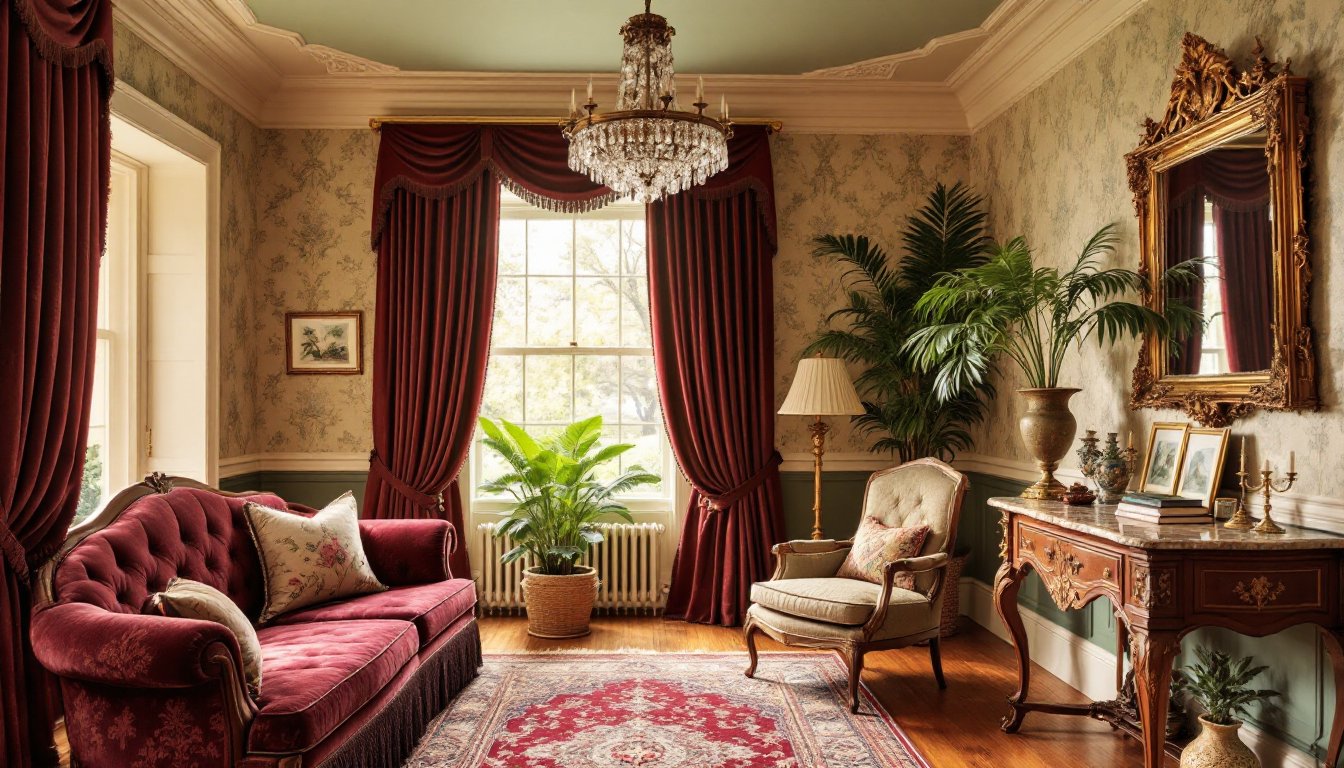
Pattern and Texture form the backbone of Victorian rooms. Damask wallpaper, floral prints, stripes, and geometric designs often appear together, balanced by solid upholstery and heavy drapery. Wall treatments typically feature wainscoting (a paneled dado running three to four feet up the wall) paired with patterned paper above. Floors showcase richly stained hardwood, often layered with ornate area rugs featuring Persian or floral motifs.
Furniture pieces are statement-making, carved wood frames, curved silhouettes, and turned legs are hallmarks. Rooms often feel full but intentional: each piece contributes visual weight. Velvet, brocade, and tufted upholstery add softness alongside the structural drama.
Architectural details matter. Crown molding, ceiling medallions, ornate baseboards, and arched doorways define Victorian spaces. If your home lacks these elements, don’t despair, adding crown molding or a chair rail (a horizontal trim at roughly 32 inches from the floor) can immediately suggest the period aesthetic without requiring structural changes.
When exploring Victorian style interior design, remember that the Victorians mixed formality with coziness: parlors feel intimate even though their grandeur.
Color Palettes And Wallpaper
Victorian color schemes typically lean toward jewel tones and rich, saturated hues. Deep burgundy, forest green, navy, plum, and chocolate brown dominated interiors, often paired with cream, gold, or pale gray accents. These dark, moody backgrounds let intricate patterns and gilded details shine.
Wallpaper selection is crucial and historically accurate. Victorians favored damask, Florals, and intricate geometric patterns, often multiple patterns in a single room if balanced carefully. Modern Victorian designs update these classics with updated colorways and scale: a large-scale floral feels contemporary while staying true to the aesthetic. Aim to choose one primary pattern (say, a damask on the lower two-thirds of the wall) and balance it with a coordinating solid or smaller secondary pattern above the chair rail.
When selecting colors, consider that Victorians used paint strategically: walls below the dado rail, the painted or paneled lower section, were often darker (matte oil-based paint was standard). Above, wallpaper or paint ranged from patterned to pale. This contrast adds depth and prevents rooms from feeling oppressively dark.
Accent walls work well in Victorian spaces too. A single wall in deep jewel-tone paint or patterned wallpaper, opposite an entrance, draws the eye and creates drama without overwhelming. Paint quality matters: use quality interior latex or eggshell-finish products that provide durability and washability in high-traffic areas like dining rooms, where historical accuracy takes a backseat to practicality.
Furniture And Upholstery
Authentic Victorian furniture features heavy wood frames, often carved or turned, with upholstery in sumptuous fabrics. Pieces like wingback chairs, fainting couches, settees, and ornately carved dining tables define the era.
Selecting Authentic Pieces
You don’t need to source 150-year-old originals, authentic-looking reproductions work beautifully and often provide better durability and comfort. Hunt for pieces at estate sales, antique shops, or reproduction furniture makers who specialize in period-accurate silhouettes.
Key furniture profiles include:
• Cabriole legs (curved, often ending in claw feet) on chairs, tables, and sofas
• Ornate carved wood backs on dining chairs and parlor furniture
• Button-tufted upholstery on sofas, ottomans, and headboards
• Heavy wood frames with inlays or veneers on case goods
• Ornamental brass or ceramic hardware on dressers and cabinets
Upholstery fabric choices dramatically affect the look and feel. Velvet, damask, brocade, and jacquard fabrics echo period authenticity, though modern performance fabrics (stain-resistant treated versions) suit family living. Pair patterned upholstery with solid-color throw pillows and vice versa: mix textures, silk trim, fringe, tassels, for richness. Heavy, floor-length drapery in matching or coordinating fabrics frames windows and adds warmth. Consider lining curtains for structure and light control: blackout linings are practical for bedrooms without sacrificing the aesthetic.
You can adapt Victorian principles by mixing one strong antique or reproduction piece (a carved settee, an ornate mirror, a marble-topped console) with newer, simpler furniture, allowing both to shine. This balance keeps Victorian-inspired rooms from feeling like historic house museums.
Lighting And Accessories
Victorian lighting combines function with decorative presence. Chandeliers, crystal, brass, or bronze, anchor formal rooms like dining areas and entryways. Wall sconces with fabric shades or frosted glass add ambient light and visual interest. Gas lamps, though now electric, evoke authentic period charm.
When selecting fixtures, look for details like beaded chains, ornamental arms, or etched glass that align with your chosen era (early Victorian differs subtly from late). Most modern reproductions offer excellent craftsmanship: ensure fixtures are properly rated for your room size (chandelier diameter should be roughly 12 inches per 10 feet of room width).
Accessories layer personality into Victorian spaces. Decorative mirrors with ornate gilded frames reflect light and expand rooms visually. Collections of framed botanical prints, oil paintings, or sepia photographs densely arranged on walls create a gallery effect typical of the era. Mantels hold candelabras, brass candlesticks, small sculptures, and framed images. Books, displayed on shelves, stacked on side tables, or arranged in a reading nook, reinforce the intellectual, cultivated feel Victorians cultivated.
Textiles beyond upholstery matter too: lace doilies on furniture arms, heavy velvet table skirts, fringed throws, and embroidered cushions add softness. Plants in decorative ceramic pots (Victorians loved ferns and palms in parlors) introduce organic shape and greenery. Persian or Turkish rugs, layered over hardwood, define seating areas and muffle sound in otherwise formal rooms.
Remember: Victorian rooms often feature living room home interior design principles of balance and intentional curation. Every object should serve beauty or function, contributing to an overall narrative of cultured comfort.
Adapting Victorian Design For Modern Homes
Pure historical recreation rarely suits modern life. The key is borrowing Victorian style interior design elements and adapting them to contemporary comfort and function.
Start selectively. You needn’t commit your entire home to the aesthetic. A Victorian-inspired dining room interior design feels luxurious and formal, ideal for entertaining, while keeping bedrooms and bathrooms simpler. A Victorian accent wall or a heavily appointed entryway can anchor the style without overwhelming every room.
Modernize comfort standards without sacrificing elegance. Victorians tolerated drafty windows and dim lighting: you don’t have to. Install modern HVAC systems behind period-appropriate baseboards. Use energy-efficient bulbs in vintage-style fixtures. Upgrade upholstery to performance fabrics that resist staining, crucial if you have kids or pets.
Scale down ornament where needed. Victorian rooms were often smaller and lower-ceilinged than modern spaces. In a lofty contemporary home, a massive crystal chandelier might overwhelm: instead, choose one with restrained ornamentation or pair it with cleaner architectural lines elsewhere. Wallpaper one wall rather than all four if patterns feel too busy.
Many homeowners successfully blend Victorian accents into modern home interior design by anchoring spaces with one or two showstopping Victorian pieces, an ornate mirror, a tufted sofa, a marble mantel, and surrounding them with contemporary furnishings in neutral tones. This hybrid approach honors the style’s romance while honoring modern aesthetics.
If you’re serious about refining the approach across multiple rooms, consult home interior design ideas resources or consider consulting a designer familiar with period adaptations. Professional guidance ensures cohesive color flow and helps avoid clashing patterns or competing focal points. The Architectural Digest guide to Victorian interiors showcases contemporary homes where Victorian elements anchor spaces beautifully.
Conclusion
Victorian interior design endures because it celebrates beauty, craftsmanship, and intentional living. Whether you embrace the full aesthetic or select key elements, layering pattern, rich color, ornamental detail, and curated furnishings creates spaces that feel collected, elegant, and timelessly inviting. Start with one room, choose your color palette and signature pieces, and let the style evolve as you source fabrics, fixtures, and accessories that resonate. The result: a home that whispers sophistication and welcomes warmth in equal measure.