Modern boho interior design blends the free-spirited, layered aesthetic of bohemian style with the clean lines and intentional simplicity of contemporary design. Unlike traditional boho, which leans heavily into maximalism and eclecticism, modern boho strips away excess while keeping the warmth, texture, and natural elements that make spaces feel lived-in and inviting. It’s about creating a home that feels relaxed without sacrificing polish, one where carefully curated pieces coexist with plenty of breathing room. This approach has gained serious traction in 2026 because it balances comfort with sophistication, offering homeowners a way to express personality while maintaining a sense of calm.
Table of Contents
ToggleKey Takeaways
- Modern boho interior design intentionally blends bohemian warmth with contemporary minimalism, creating relaxed spaces that feel polished without excess.
- Natural materials—raw wood, linen, jute, ceramic, and stone—form the foundation of modern boho style, layered to create visual interest through texture rather than bold colors.
- Warm neutral base colors (cream, beige, taupe) anchored by muted earthy accents (sage green, terracotta, dusty blue) prevent spaces from feeling busy while maintaining inviting warmth.
- Plants are central to modern boho design, displayed prominently in natural woven planters and used as visual anchors throughout the home.
- Intentional curation over accumulation distinguishes modern boho—every furniture piece, artwork, and accessory should serve both function and purpose within the overall design.
- Layered, warm lighting (2700K fixtures with rattan, linen, or brass elements) combined with natural light through linen curtains creates the calm, intimate ambiance essential to modern boho spaces.
What Defines Modern Boho Style
Modern boho is fundamentally about intentionality. Where classic bohemian design celebrates clutter as character, modern boho curates it. You’re looking at a space where every piece, whether furniture, art, or accessory, has a reason to be there, not just because it was found at a flea market.
The style emphasizes natural materials and organic shapes. Think raw wood, natural fibers like jute and linen, stone, and clay. Curves and asymmetrical layouts replace rigid, geometric arrangements. A room might feature a curved sofa or an amorphous coffee table made from reclaimed wood alongside cleaner furnishings that prevent the space from feeling cluttered.
The philosophy centers on mixing high and low, old and new. A vintage kilim rug might sit next to a minimal pendant light. Handcrafted pottery shares shelf space with contemporary art. This intentional mixing prevents modern boho from feeling either too trendy or too nostalgic. It remains timeless because it’s rooted in personal taste rather than strict rules.
Another core element is a sense of calm and spaciousness. Unlike maximalist bohemian spaces that celebrate fullness, modern boho leaves negative space, walls that breathe, shelves that aren’t crammed. This restraint is what keeps the style feeling contemporary rather than retro.
Color Palettes and Textures
Modern boho color schemes tend toward warm neutrals anchored by earthy tones. You’ll see a lot of cream, beige, soft tan, warm white, and taupe as base colors. These neutral foundations prevent the space from feeling busy and allow texture and accent pieces to shine.
The palette then layers in accent colors drawn from nature: terracotta, ochre, sage green, dusty blue, warm rust, and clay tones. Unlike the jewel-toned, saturated colors sometimes seen in traditional boho, modern boho uses more muted, desaturated versions of these hues. A wall might be painted in soft sage rather than deep forest green. Textiles feature warm terracotta accents in subtle patterns rather than bold primary colors.
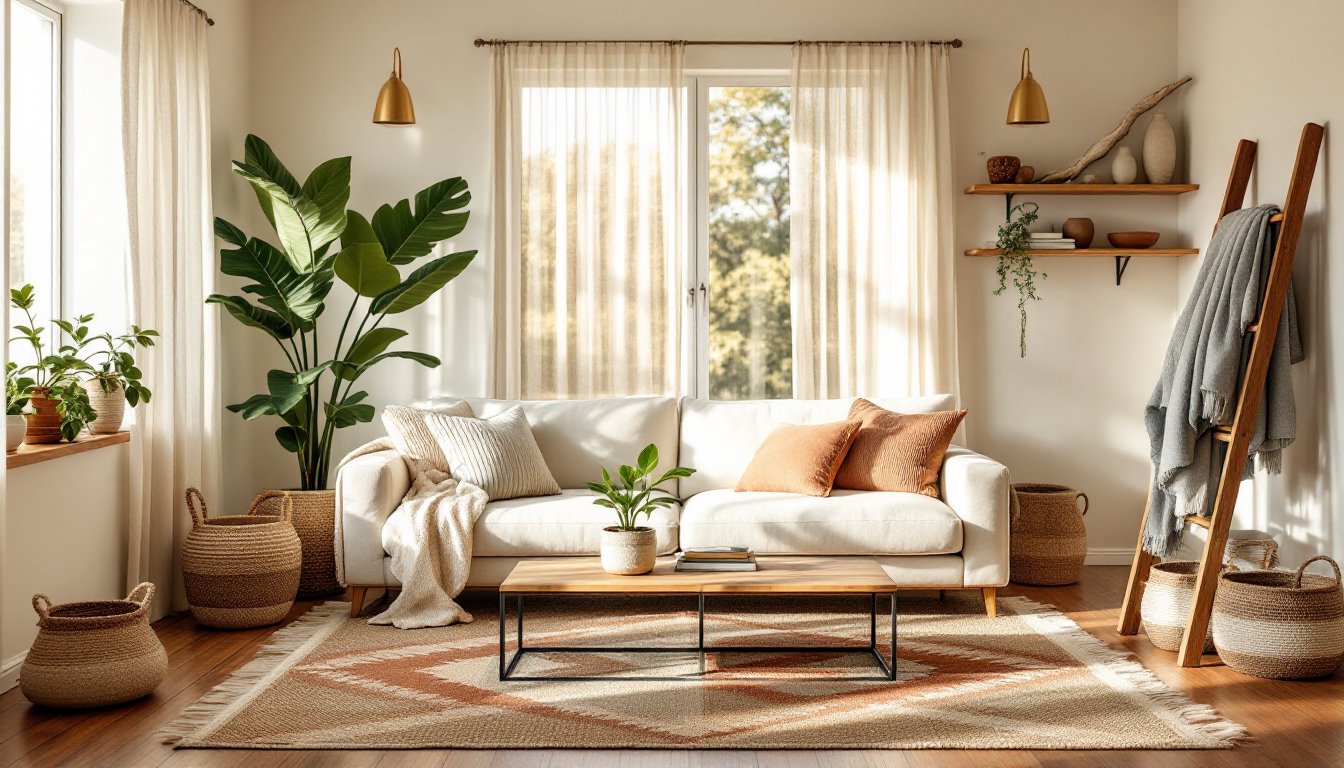
Texture is where modern boho really distinguishes itself. Layering different tactile surfaces creates visual interest without relying on bright colors or busy prints. Combine linen, wool, jute, raw wood, stone, ceramic, and woven elements. A room might feature a soft wool throw on a linen sofa, jute rope details on a light fixture, and smooth ceramic vases. This textural variety makes spaces feel rich and inviting without visual overwhelm.
Wall finishes often incorporate plaster textures or remain intentionally simple, plain paint or subtle texture rather than patterns. Woven wall hangings or macramé pieces (used sparingly) add dimension. The goal is a cohesive, calming palette where every element contributes to a sense of understated warmth. When browsing modern home interior design inspiration, notice how successful modern boho relies on restraint in color while embracing generous texture.
Essential Furniture and Layout
Furniture selection in modern boho prioritizes comfort and natural materials. Look for pieces with wooden frames (walnut, oak, or reclaimed wood) rather than metal or plastic. Upholstery should favor natural fabrics, linen, cotton, wool, in neutral or warm tones. A linen sectional or sofa in cream or warm taupe serves as an ideal anchor for a modern boho living space.
Layouts emphasize flow and openness. Rather than pushing furniture against walls, modern boho arrangements often float pieces in the room, a sofa angled in the center, a low wooden coffee table in front of it, a pair of chairs creating conversation areas. This approach uses negative space intentionally and creates intimacy without crowding.
Wood is the material of choice for case goods. A wooden dining table with an organic edge, wooden shelving units, wooden bed frames, these elements ground the space and reinforce the natural aesthetic. Avoid overly ornate or heavily finished pieces: raw, light finishes work better than dark, heavy stains.
Storage is functional and visible. Instead of hiding everything behind cabinet doors, modern boho embraces open shelving and woven baskets. Pottery, books, and plants sit on display. This works because pieces are thoughtfully selected rather than accumulated randomly. When planning dining room interior design with modern boho elements, choose a solid wood table with natural edges and pair it with mixed seating, a wooden bench on one side, upholstered chairs on the other.
Scale matters. Furniture should be proportionate to the room without overwhelming it. An oversized sectional in a small space defeats the purpose of modern boho’s calming aesthetic. Similarly, leggy furniture (pieces elevated on thin legs rather than skirted to the floor) maintains that sense of openness and breathing room.
Decor Elements and Accessories
Decor in modern boho should feel collected rather than coordinated. This doesn’t mean chaotic, it means that each item adds a story or texture. Start with art: a mix of framed prints, unframed canvases, and textiles on walls creates visual interest. Lean toward nature-inspired art (botanical prints, landscape photography, abstract pieces in warm tones) rather than family photo galleries or statement neon signs.
Rugs anchor spaces and add tremendous texture. Layer a jute or sisal rug with a smaller patterned wool or kilim rug on top. Rugs in modern boho often feature geometric patterns, stripes, or natural weaves rather than dense, ornate designs. The pattern should feel intentional and balanced.
Ceramic and clay vessels are staple decor. Handmade pottery in neutral tones, textured ceramic vases, clay pots of varying sizes, these pieces serve both function and aesthetics. Group them in odd numbers (three, five, seven) on shelves or tables rather than perfectly symmetrical pairs. Experts in contemporary design at Dwell often showcase how modern homes incorporate artisanal ceramics as focal points.
Textiles beyond furniture matter too. Throw pillows in linen, cotton, or wool: macramé wall hangings (used sparingly): woven blankets draped over chairs. These soft elements add warmth and layering without visual noise.
Plants and Natural Materials
Plants are non-negotiable in modern boho. They’re not optional accessories, they’re central to the style. Large statement plants like fiddle leaf figs, monstera, or pampas grass in tall woven baskets create visual anchors. Smaller potted plants and succulents sit on shelves and tables. Hanging planters with trailing pothos or string of pearls add vertical interest.
The key is using natural, woven planters rather than plastic pots. Wicker baskets, terracotta pots, and ceramic planters in neutral tones integrate seamlessly with the design. Plants are displayed prominently, windowsills, corner stands, hanging from ceiling hooks, because they’re central to the aesthetic, not afterthoughts.
Other natural materials reinforce this earthy foundation. Raw wood shelving, branches or driftwood in tall vases, unpolished stone surfaces, linen curtains that filter light naturally. These materials age gracefully, developing patina and character over time, which aligns with modern boho’s celebration of authenticity. Incorporate these elements thoughtfully rather than forcing “natural” decor everywhere. A single tall wooden ladder leaning against a wall holds blankets and plants: a piece of driftwood on a shelf becomes sculptural.
Lighting and Ambiance
Lighting in modern boho should feel warm and natural, never harsh or clinical. Layers of light are essential, ambient overhead lighting, task lighting for reading or working, and accent lighting to highlight special pieces.
Fixture choice matters significantly. Avoid sleek metal fixtures or minimalist geometric designs that feel too contemporary. Instead, seek fixtures with natural warmth: rattan or woven shades, wooden elements, or warm brass finishes. A statement pendant light with a woven rattan shade works beautifully over a dining table. Sconces with linen shades flanking a mirror add softness to bathrooms or bedrooms. Floor lamps with natural tripod bases (wood or brass) and fabric shades create cozy reading corners.
Color temperature is crucial, always lean toward warm white (2700K) rather than cool or bright white. This warmth reinforces the inviting, comfortable feel that modern boho aims for. Dimmable lights allow you to adjust ambiance throughout the day and evening.
Natural light should be maximized. Linen curtains soften sunlight without blocking it entirely. Sheer linen panels let light filter through while maintaining privacy. When blocking light is necessary, use natural fiber roller shades made from jute or cotton rather than heavy blackout curtains.
Candles and soft accent lighting create evening ambiance. Group candles in varying heights on a coffee table or shelf. The flickering, warm glow is quintessentially modern boho, calming and intimate. Consider living room home interior design that incorporates warm layered lighting, and you’ll notice how it transforms the space’s entire mood. String lights, when used subtly (not the novelty variety), can add warmth to outdoor spaces or bedroom corners without looking kitschy.
Conclusion
Modern boho interior design offers a sophisticated path between minimalism’s austerity and maximalism’s excess. It celebrates natural materials, warm colors, and organic shapes while maintaining intention and restraint. By focusing on layered textures, thoughtfully curated pieces, and plenty of breathing room, homeowners can create spaces that feel both contemporary and timeless. The style works across any room size and budget because it prioritizes authenticity over trends. Whether you’re starting fresh or refining an existing space, modern boho principles, natural materials, warm light, visible plants, and intentional curation, guide decisions that result in homes that feel genuinely inviting.