Colonial interior design evokes a sense of history, stability, and understated elegance that’s remained relevant for centuries. Whether you’re drawn to the formal symmetry of early American homes or the warm, inviting character of colonial-style spaces, this design approach offers practical beauty without demanding constant trend-chasing. Homeowners and DIY enthusiasts appreciate colonial design because it emphasizes quality craftsmanship, natural materials, and proportions that feel balanced and purposeful. If you’re considering a new colonial interior design or refreshing your space with colonial elements, this guide walks you through the essentials, from understanding the style’s core principles to implementing them room by room in your own home.
Table of Contents
ToggleKey Takeaways
- Colonial interior design emphasizes quality craftsmanship, natural materials, and balanced proportions that create a timeless, lived-in aesthetic rather than a trendy showroom look.
- Use restrained color palettes with deep, muted tones like forest green and warm ochre for walls, paired with white or cream trim to highlight architectural details and woodwork.
- Invest in sturdy furniture with visible joinery and honest wood finishes (cherry, walnut, oak) in varying tones, sourced gradually as quality pieces rather than assembled all at once.
- Incorporate architectural elements like wainscoting, substantial baseboards (3½–5 inches), and simple crown molding to establish colonial character in any home, period or new.
- Select period-appropriate hardware, lighting fixtures, and accessories (wrought iron, aged brass, simple fixtures) while avoiding contemporary materials like polished chrome or overly ornate details.
- Colonial interior design works equally well in period homes and modern spaces when adapted thoughtfully, as the style prioritizes restraint and functionality over elaborate decoration.
What Is Colonial Interior Design?
Colonial interior design draws inspiration from American homes built between the 1600s and early 1800s, blending functionality with restrained ornamentation. The style originated from English, Dutch, and Spanish influences, adapted to the materials and needs of early settlers. Rather than chasing decoration for decoration’s sake, colonial design prioritizes solid construction, honest joinery, and the beauty of well-chosen wood.
At its core, colonial style reflects practicality. Furniture was built to last, with visible wood joinery and simple joinery methods like mortise-and-tenon joints that you can still spot in period pieces today. Rooms were arranged symmetrically around a central fireplace or focal point, a practice that still feels visually satisfying to the modern eye. The palette is restrained: deep, earthy tones derived from natural dyes and available pigments. Gold leaf, marble, and elaborate carving appear sparingly, reserved for pieces of genuine importance.
What makes colonial design enduring is that it feels like home rather than a museum exhibit. Cozy Cottage Cottage Interior Design shares similar warmth and emphasis on lived-in comfort. Colonial interiors work especially well in period homes, but they’re equally at home in newer construction when adapted thoughtfully. The style doesn’t demand you strip away modern conveniences, it simply asks that you respect proportion, material quality, and restraint.
Key Elements and Characteristics
Color Palettes and Wall Finishes
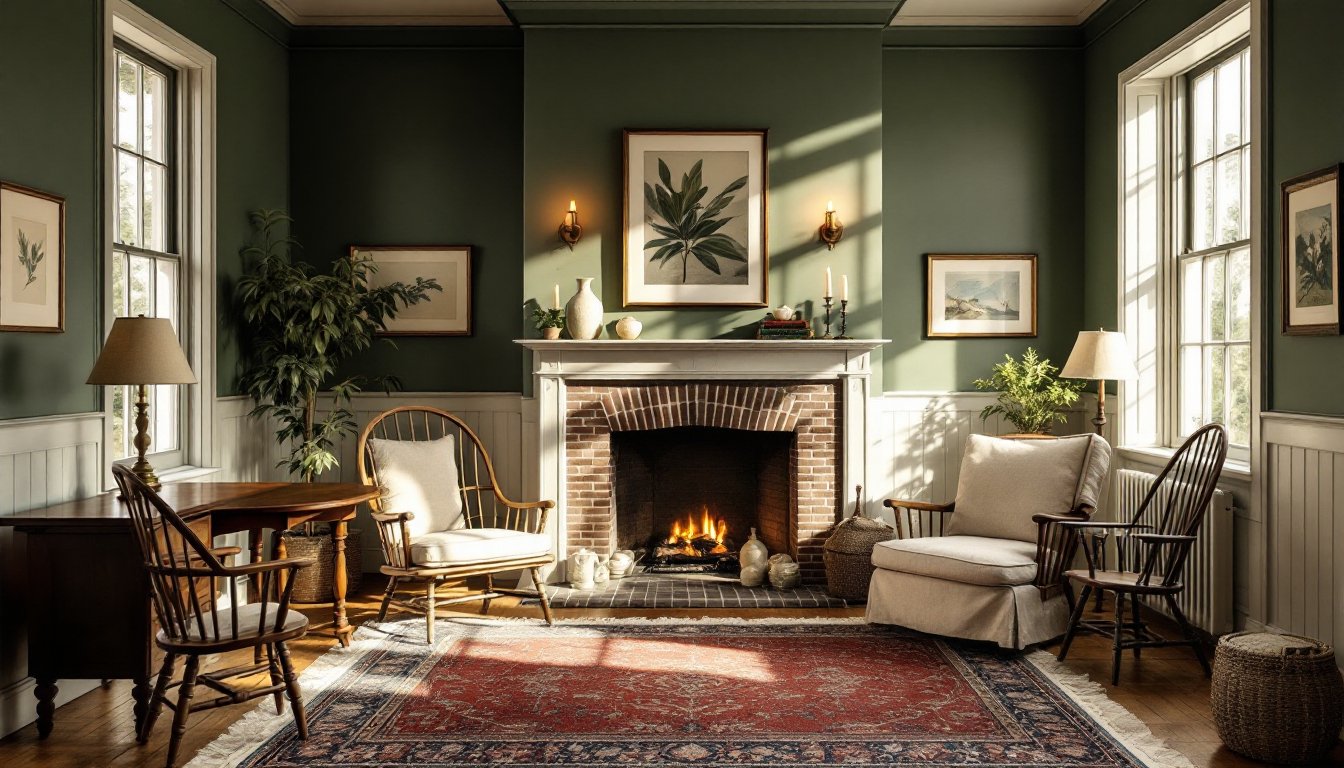
Colonial color schemes lean heavily on muted, nature-inspired tones. Deep reds, forest greens, warm ochres, and soft blues dominated period homes because these pigments came from earth, minerals, and plant materials. Walls were often painted with milk paint, a durable, breathable finish that absorbed pigment unevenly, creating subtle variations and a lived-in quality. Reproduction milk paints are available from specialty suppliers if you’re chasing authentic appearance, brands like Old-Fashioned Milk Paint offer period-appropriate finishes, though standard latex paint works fine for modern practicality.
Wood trim, baseboards, and architectural details typically stayed white or cream, creating contrast and drawing the eye to craftsmanship. Wallpaper appeared in colonial homes, but sparingly, often in small, geometric patterns or toiles depicting pastoral scenes. The key is restraint: avoid large-scale florals or metallic sheens that read as contemporary rather than period.
Wainscoting, a practical and attractive option, was common in colonial homes. Running 3 to 4 feet up the wall, it protects drywall from bumps and provides visual interest without overwhelming the space. Installing wainscoting involves cutting 1×6 or 1×8 nominal pine lumber (which measures ¾” × 5½” or ¾” × 7½” actual), securing it with a stud finder-located frame, and capping it with a dado rail or simple molding.
Furniture and Wood Tones
Colonial furniture prioritizes sturdy construction and recognizable wood grain over elaborate veneers. Cherry, walnut, and oak appear throughout period interiors, often left in their natural state or finished with clear oil or wax. A modern colonial living room typically features a mix of wood tones, not matched uniformly, but balanced thoughtfully. This authenticity comes from the fact that colonial furniture makers worked with whatever local wood was available, so variation felt natural.
Key pieces include Windsor chairs (spindle-backed, lighter weight, and surprisingly comfortable), tables with turned legs, and case pieces with bold hardware, often wrought iron or brass. Upholstery, when present, used linen, wool, and eventually cotton in solid colors or simple patterns. Avoid overstuffed modern sofas: colonial seating tends toward more restrained proportions.
A modern take on colonial furniture doesn’t demand you source antiques. Look for reproductions that honor the essential features: visible joinery, appropriate proportions, and honest material selection. Pieces from suppliers specializing in colonial reproductions offer durability and period-correct details without the price tag of genuine antiques. This Old House’s restoration guides often showcase furniture selection and finishing techniques that align with colonial principles, offering real-world examples of how to source and integrate period pieces into lived-in homes.
How to Incorporate Colonial Style Into Your Home
Start with architecture and structural elements. Before redecorating, evaluate what you’re working with. Original wide-plank flooring, exposed beams, or period fireplace surrounds set the tone immediately. If you’re working in a newer home without these features, you can create authentic-looking alternatives: reclaimed wood flooring (or engineered planks mimicking wider boards) and focal-point fireplaces with simple surround details. Avoid faux stone veneers or overly ornate mantels: colonial fireplaces were functional, with simple brick or wood surrounds.
Architectural trim matters enormously. Crown molding, baseboards, and door casings establish the visual framework for colonial design. Stock moldings from any home center work, but scale matters: choose profiles that feel substantial without being ornate. A simple 3½” to 5″ baseboard with a 2″ to 3″ crown molding feels colonial: thin, spindly trim reads contemporary.
Plan your color scheme room by room. Paint is the quickest, most affordable way to establish colonial character. A common approach: walls in a deep historical color (Benjamin Moore’s HC-84 Clintwood Green or HC-81 Hale Navy are popular choices), with trim in off-white like Benjamin Moore OC-17 White Dove. Test samples in your actual space under natural and artificial light before committing. Flat or eggshell finishes look more period-appropriate than glossy sheens on walls.
Incorporate architectural details thoughtfully. Dining Room Interior Design often benefits from period-appropriate trim and paneling, creating a formal gathering space. Wainscoting in dining areas or entryways adds visual interest and practical protection. Hardware, cabinet knobs, hinges, and door hardware, should feel colonial: look for wrought iron or aged brass rather than polished chrome or modern sculptural handles.
Select furniture and textiles with intention. Furnish gradually, prioritizing quality over quantity. A single well-chosen piece, like a cherry drop-leaf table or walnut secretary desk, anchors the room far better than an ensemble of mediocre reproductions. Layer in textiles: wool area rugs in deep colors, linen or linen-cotton blend curtains in solids or modest patterns, and upholstery in natural fibers. Avoid busy prints: colonial interiors favored stripes, small checks, and simple florals.
Don’t overlook lighting. Colonial homes relied on candlelight, which is warm and directional. Recreate this with period-appropriate fixtures: wall sconces flanking mirrors or mantels, simple brass or iron chandeliers, and table lamps with shades in linen or parchment. Avoid crystal chandeliers (too formal) or Edison bulbs (too trendy): aim for fixtures that feel timeless and functional rather than decorative.
Accessorize sparingly. Colonial homes displayed items of genuine value or utility: pewter plates, leather-bound books, hooked rugs, and botanical prints in simple frames. A modern colonial living room might feature a collection of antique maps, period-appropriate pottery, or a well-organized bookshelf as visual focal points. Avoid decorative objects for their own sake: every piece should feel like it belongs.
Research from Home Bunch’s interior design galleries showcases successful colonial spaces in contemporary homes, demonstrating how restraint and authentic materials create lasting appeal. Similarly, Southern Living frequently covers colonial and colonial-inspired homes across the South, offering regional perspectives on how the style adapts to different climates and architectural contexts.
If you’re tackling a larger renovation, Home Interior Design Ideas covers broader strategic approaches to updating living spaces while maintaining character. For specific technical guidance on installation of trim, hardware, or finishes, consult step-by-step renovation resources or, if the scope is significant, a contractor experienced in period work. Many jurisdictions have local preservation guidelines: verify whether your home or neighborhood has historic district restrictions before making major changes.
Conclusion
Colonial interior design succeeds because it’s built on principles that still matter: quality materials, honest construction, thoughtful proportion, and restraint. You don’t need a period home or a limitless budget to embrace the style, start with architecture and color, layer in furniture with intention, and avoid trends that’ll feel dated in a few years. The reward is a home that feels settled, authentic, and genuinely yours rather than a showroom interpretation of history.