Asian interior design has quietly reshaped how homeowners approach their living spaces, moving beyond fleeting trends to offer genuinely enduring principles. Unlike Western maximalism, which often celebrates visual abundance, Asian design philosophy emphasizes restraint, intentionality, and the beauty found in empty space. Whether you’re drawn to Japanese minimalism, Chinese feng shui, or Thai-inspired warmth, these design traditions share a common goal: creating environments where function and aesthetics merge seamlessly. This guide walks you through the core principles and practical elements that make Asian interior design work, helping you transform your home into a balanced, serene sanctuary.
Table of Contents
ToggleKey Takeaways
- Asian interior design principles of balance, harmony, and minimalism create serene, intentional spaces by removing excess and allowing function and aesthetics to merge seamlessly.
- Natural materials like solid wood, bamboo, stone, and handmade ceramics are foundational to Asian design and develop character over time, supporting both aesthetic and sustainability goals.
- Soft, nature-inspired color palettes combined with layered textures and low-profile furniture create visual interest without overwhelming the space, with matte finishes and warm lighting essential for authentic results.
- Strategic use of negative space (ma) and floating furniture arrangements allows sight lines to flow naturally, making rooms feel spacious and intentional regardless of actual square footage.
- Hidden storage solutions with closed cabinetry and minimal visible display maintain the calm aesthetic while keeping daily clutter completely out of view.
Understanding Core Principles Of Asian Design
Balance, Harmony, and Minimalism
Asian interior design rests on three interconnected principles that govern every decision, from wall color to furniture placement. Balance isn’t merely visual symmetry, it’s the interplay between opposing forces that create a sense of calm. Think of yin and yang: light and shadow, solid and void, warm and cool.
Harmony in Asian design means each element serves a purpose and relates logically to its neighbors. A single scroll painting on a wall isn’t random decoration: it’s positioned to anchor the room and draw the eye. Materials, textures, and colors follow suit, they don’t clash or compete. This approach directly influences modern home interior design, where the goal is creating cohesive, uncluttered environments.
Minimalism is the most visible expression of these principles. It doesn’t mean sparse or cold: rather, it strips away excess to reveal what matters. A room with five carefully chosen pieces of furniture, each with clean lines and natural materials, feels richer than one crammed with ornate reproductions. This philosophy demands intentionality, you can’t buy on impulse and hope it fits. Every addition must earn its place.
Starting your Asian-inspired redesign means asking hard questions: Does this piece serve a function or evoke beauty? Can I live without it? If the answer to both is no, it stays. If you’re uncertain, remove it. Space itself becomes a design element, almost like negative space in a drawing.
Key Elements That Define Asian Interiors
Natural Materials and Sustainable Choices
Asian design draws power from materials that age gracefully and connect us to the natural world. Wood is the foundation, whether it’s a Japanese tansu chest, Chinese hardwood furniture, or simple wooden flooring. Unlike veneers or composites, solid wood develops character over time: a worn edge or patina tells a story.
Stone, bamboo, paper, and clay appear throughout Asian interiors as primary materials rather than accents. Bamboo flooring offers warmth and subtle grain variation. Stone, granite, slate, or river rock, brings weight and permanence. Handmade ceramics and pottery carry human touch: they’re rarely perfectly uniform, which is the point. That slight irregularity reminds us the piece was crafted by hands.
Woven textures matter enormously. Jute, linen, and rattan furnishings appear in area rugs, wall hangings, and furniture upholstery. These materials breathe, age naturally, and support sustainable sourcing practices, a core value in Asian design philosophy. When sourcing materials, prioritize craftspeople and suppliers who use responsible harvesting and traditional techniques.
For walls, consider natural plaster, limewash, or matte paint finishes instead of glossy latex. Glossy surfaces reflect light aggressively and feel synthetic: matte finishes absorb light and create depth. If you’re tackling a dining room interior design project with Asian influences, specify low-VOC (volatile organic compound) paint to keep the air quality high, another sustainability priority. Your local building codes may also require specific product certifications, so verify with your supplier before ordering large quantities.
Color Palettes and Textures
Asian color schemes draw from nature: soft grays, warm blacks, creams, soft greens, and earth tones. These aren’t drab or boring, they’re sophisticated and calming. The palette creates a neutral backdrop so that texture, shadow, and craftsmanship become the visual focus.
Warm grays (greige, taupe, soft charcoal) work beautifully on walls. They absorb light rather than bounce it back, creating visual depth. Cream and off-white accents prevent the space from feeling heavy. If you want color, introduce it sparingly through natural dyes in textiles or artwork rather than painting an entire accent wall. A single wall of deep forest green or warm terracotta works, but it must integrate with the overall philosophy, not scream for attention.
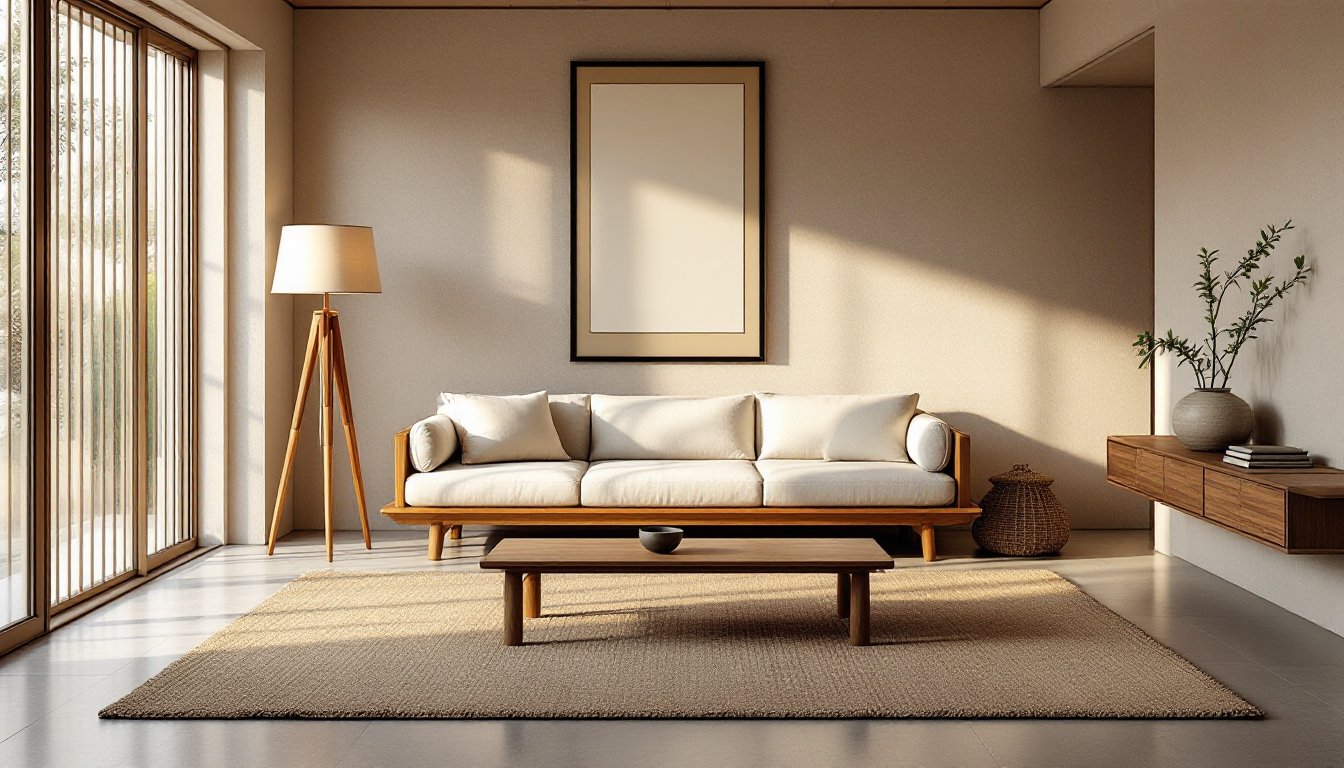
Texture compensates for color restraint. Layering rough stone, smooth wood, woven natural fibers, and polished ceramics creates visual interest without chaos. A single living room might combine a linen sofa, wooden low table, stone floor, woven wall hanging, and ceramic vessels. Each material catches light differently and invites touch. Run your hand across materials when selecting them: if it doesn’t feel good, it won’t look right in person.
Lighting strongly influences how colors and textures read. Harsh overhead lighting flattens everything. Instead, use layered lighting: natural daylight through paper screens or sheer curtains, soft ambient light from floor lamps, and warm accent lighting to highlight textures. Avoid LED bulbs rated above 3000K (kelvin), as cooler tones feel clinical and undermine the warm, natural aesthetic.
Furniture and Layout Strategies
Creating Space With Purpose
Asian furniture prioritizes low profiles and simple geometric forms. Japanese pieces sit close to the ground, creating intimacy and visual calm. Chinese hardwood furniture often features clean lines with minimal ornamentation. Thai and Southeast Asian pieces blend function with subtle decorative details, carved legs or inlaid patterns, but never overwhelm the silhouette.
Choose furniture with clear structural lines over pieces with fussy details. A low platform bed with clean edges and open space beneath invites visual flow through the room. A solid wood table with tapered legs feels lighter than one with a chunky pedestal base. Storage furniture (dressers, shelving, cabinets) should have closed or slatted fronts rather than glass, visual clutter inside undermines the calm exterior.
Layout strategy in Asian design centers on the concept of ma (negative space). Rather than pushing furniture against walls and centering a sofa on the TV, float furniture to create conversation areas and allow sight lines to travel unobstructed. A living room home interior design with Asian influences might feature a low sofa, two comfortable chairs angled slightly inward, a minimal coffee table, and significant open floor space around the perimeter.
Floor plans should feel intentional, not cramped. If your bedroom is small, one well-chosen bed, a single nightstand, and open wall space read better than forcing in a dresser and two side tables. If your dining room is narrow, a long, lean table serves the purpose better than forcing a round one that eats space. Assess your actual needs, not your Pinterest fantasies, and size furniture accordingly.
Storage solutions in Asian design hide clutter completely. Built-in cabinetry with shoji-style sliding doors, low storage benches, and under-bed drawers keep daily items out of sight. Shelving, when visible, displays only objects that contribute to the overall aesthetic: one framed photograph, a ceramic vessel, a book. The rule of three or five objects per shelf prevents visual chaos. Practical guides for interior design ideas for home often overlook this discipline, but it’s essential to Asian design’s success.