A barndominium blurs the line between rustic charm and contemporary living. Whether you’re converting an existing barn or building from the ground up, the interior design sets the tone for how you’ll actually live in the space. The good news: barndominiums give you creative freedom that traditional homes don’t. You’re working with soaring ceilings, open layouts, and often dramatic structural elements like exposed beams and concrete floors. The challenge is turning that blank canvas into a cohesive, livable home that feels both polished and authentic. Here are seven design approaches that work beautifully in barndominium spaces right now.
Table of Contents
ToggleKey Takeaways
- Barndominium interior design thrives when you balance raw industrial elements like exposed beams and concrete with soft textures, warm lighting, and comfortable furnishings to avoid a cold warehouse feel.
- Maximize open floor plans by using large-scale furniture, area rugs, and strategic lighting to define zones psychologically without blocking light and sightlines.
- Statement lighting fixtures—such as oversized pendants and sculptural chandeliers—should frame exposed beams and be layered for ambient, task, and accent effects throughout the space.
- Adopt a restrained neutral color palette (soft whites, warm grays, pale taupe) for walls to let architectural features shine, then add personality with bold accent colors through textiles and artwork.
- Choose durable flooring solutions like sealed concrete, wide-plank engineered hardwood, or luxury vinyl plank that suit your barn’s climate conditions and traffic patterns.
- Celebrate your barndominium’s unique bones—soaring ceilings, raw materials, and open layouts—by building your design outward from these structural anchors rather than hiding them.
Industrial Meets Cozy: Blending Raw Materials With Comfort
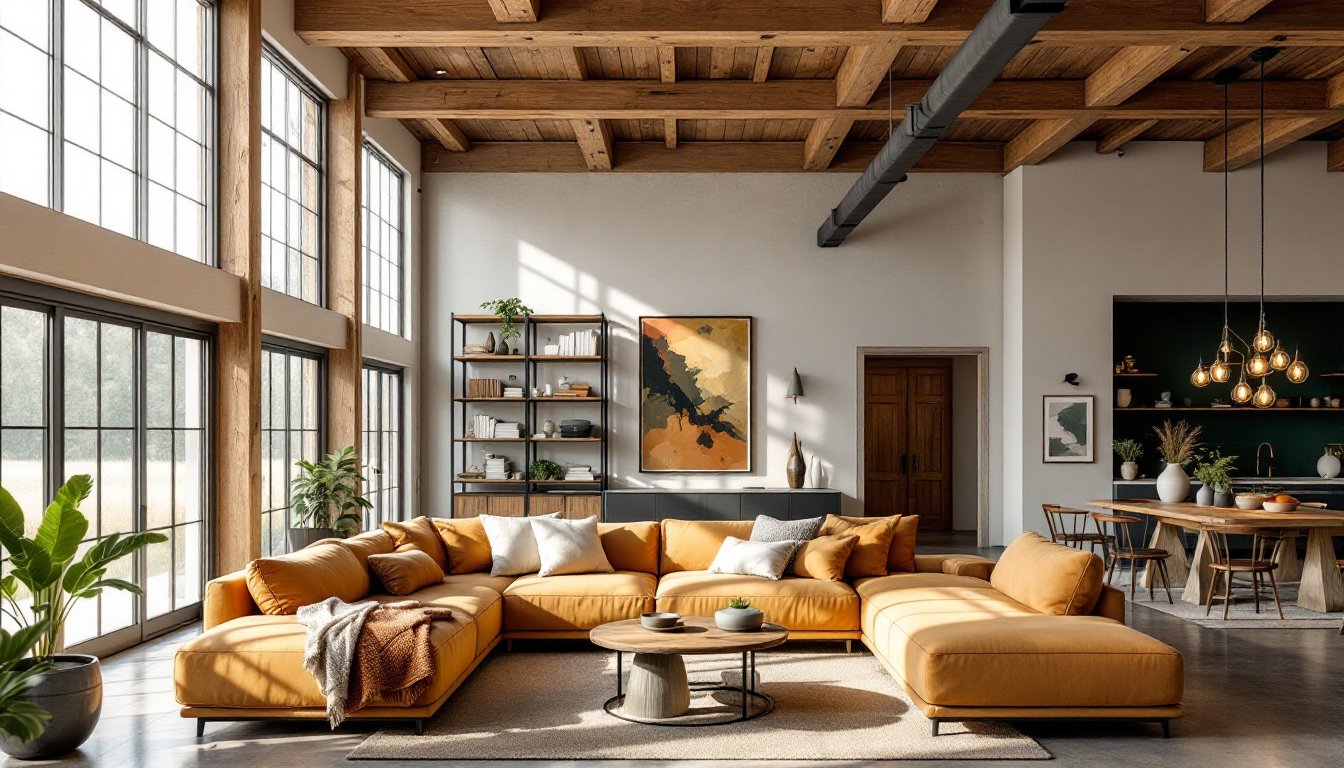
The industrial aesthetic plays naturally in barndominiums. Exposed brick, steel beams, concrete walls, and metal fixtures feel at home here. But raw industrial can feel cold and unwelcoming, the key is balancing those hard finishes with soft textures and warm lighting.
Start with your structural elements as your design anchor. If you have exposed wooden beams, embrace them rather than hide them. Pair them with warm metal finishes (aged brass or blackened steel) rather than shiny chrome. Layer in softness through upholstery: think chunky knit throws, leather chairs, and linen curtains. A large area rug in a neutral tone grounds the space and adds acoustic warmth, concrete and brick are unforgiving for sound.
For wall finishes, consider leaving some brick unpainted, but painting others in soft whites or warm grays to avoid a warehouse feel. Metal shelving works beautifully here, but fill it with books, plants, and ceramics rather than leaving it sparse and utilitarian. The goal is industrial soul with human comfort. Vintage or reclaimed wood accents (a dining table, floating shelves, or paneling) blend the raw with the refined.
Open Floor Plans: Maximizing Light and Living Space
Most barndominiums start with one big room. Your job is to make that openness work for your lifestyle rather than feeling chaotic. The lack of traditional walls means light travels beautifully, but it also means sound bounces everywhere and clutter shows instantly.
Make strategic use of large-scale furniture to divide the space. A substantial sectional, a large dining table, or even a low-profile bookcase can anchor different zones without blocking sightlines or light. Ceiling height is your ally here, if your barn is tall, vertical storage and double-height elements (like a mezzanine bedroom or loft office) create definition without breaking up the flow.
Creating Defined Zones Without Walls
Furniture placement is your primary tool. Position your sofa and television to create a living zone. Angle dining furniture slightly away from the living area to signal a separate zone. Use area rugs to visually ground each space, a rug under the living seating, another under the dining table, a third in an office corner.
Lighting changes the game too. Pendant lights over a dining table, task lighting in a work zone, and ambient floor lamps in conversation areas help define zones psychologically. Interior Design Ideas for your barndominium will be clearer when you think of light as architecture. Consider installing barn doors on a few key spaces (bedroom, bathroom) if you need privacy without full walls. Sliding barn doors reinforce the aesthetic and provide flexibility. Finally, storage is critical in open plans, built-in shelving, wall-mounted cabinetry, or even a freestanding pantry keeps clutter contained and zones visually distinct.
Statement Lighting and Exposed Beams
Barndominiums demand dramatic lighting. Your exposed beams are architectural statements, and the right fixtures amplify them rather than compete with them. Think oversized pendant lights, sculptural chandeliers, or clusters of hanging Edison bulbs. Industrial pendants work beautifully: contemporary sculptural fixtures prevent the space from feeling too agrarian.
Be intentional about where you install lighting. Hang pendants at a height that frames the beams without obscuring them, usually 30-36 inches above a dining table works well. Recessed lighting is tempting in open barns but use it sparingly: it can wash out texture and feel corporate. Instead, layer lighting: ambient (overhead or pendant), task (under-cabinet or desk-mounted), and accent (picture lights, wall sconces) create depth and flexibility.
For beam treatment itself, resist the urge to paint them white unless they’re actually white oak. Most barn beams are weathered wood with character: cleaning and finishing them (matte clear coat or light stain) preserves that texture. Real wood beams cost thousands of dollars per linear foot if you’re installing faux ones, so if you have the genuine article, honor it with lighting that highlights grain and patina. Recent designs in Home Bunch showcase how dramatic uplighting on beams transforms entire rooms after dark.
Neutral Color Palettes With Bold Accents
Barndominiums benefit from a restrained base palette. Your structural elements, beams, brick, concrete, are already providing visual noise. Walls should be quiet: think soft whites (not stark), warm grays, or pale taupe. These allow light to bounce and make the space feel larger while letting architectural features shine.
Within this neutral framework, bold accents sing. A jewel-tone sofa, a gallery wall of colorful artwork, or even a single accent wall in deep navy or forest green provides personality without overwhelm. Textiles are a safe way to add color since you can swap them seasonally, patterned throw pillows, a warm-colored area rug, or linen curtains in sage or cream.
For masculine interior design sensibilities that often appeal in barn spaces, earth tones (warm browns, deep greens, charcoal grays) with brass or copper accents create sophistication. If your aesthetic leans more eclectic, neutrals ground collected artwork and vintage finds. The key is using your main palette as a stage and letting one or two bold elements capture attention.
Flooring Solutions for Rustic Charm and Durability
Barn floors take a beating. You’re dealing with actual use, boots, spills, pets, heavy traffic, so pretty matters less than practical. Many barndominiums inherit concrete slab floors. Sealed and finished properly, concrete is durable and stylish: polished concrete with radiant heating underneath is both warm underfoot and maintenance-friendly. Budget $8–15 per square foot for professional polishing, or seal and wax it yourself for $1–3 per square foot.
Wood flooring is classic but requires protection. If you go with real hardwood, wider planks (7–9 inches) feel more proportional in a large space than narrow strips. Engineered hardwood tolerates the temperature and humidity swings that actual barns experience better than solid wood. Wider boards are also faster to install if you’re a DIYer.
Wide-plank laminate or luxury vinyl plank (LVP) mimic wood convincingly and handle moisture better than hardwood, useful if your barn isn’t climate-controlled year-round. Budget $3–8 per square foot installed. Matte finishes hide footprints: gloss attracts dust and shows wear faster.
For large areas, consider mixed flooring: concrete in utility or high-traffic zones, wood or wood-look in living areas, polished concrete in a mudroom or entryway. This breaks up visual monotony in a 3,000-square-foot open floor and makes practical sense. Small home interior design principles around zoning with flooring apply even in expansive barns, it signals space purpose without walls.
Conclusion
Your barndominium’s interior should celebrate what makes it unique: generous ceilings, raw materials, and open possibility. The seven approaches here aren’t rigid rules, mix them. Blend industrial coziness with neutral accents. Use lighting and strategic furniture to define your open floor. The best barndominiums feel deliberate and lived-in, not precious. Start with your bones (beams, concrete, natural light) and build outward from there.