Traditional interior design isn’t about being stuck in the past, it’s about bringing timeless elegance into your home right now. This design style emphasizes symmetry, classic furnishings, rich textures, and a sense of refined comfort that feels both welcoming and sophisticated. Whether you’re drawn to the warm wood tones of a period home, the structured beauty of classic furniture lines, or simply the comfort that comes with well-established design principles, traditional interior design offers a roadmap for creating spaces that look polished without feeling cold or temporary. The good news? You don’t need a mansion or a designer’s budget to achieve that classic look in your own home.
Table of Contents
ToggleKey Takeaways
- Traditional interior design emphasizes symmetry, quality craftsmanship, and layered textures rather than minimalist empty spaces, creating homes that feel collected and timeless.
- A neutral color foundation of creams and taupes paired with accent colors like forest green and navy blue, plus architectural details like wainscoting and wallpaper, defines the traditional aesthetic.
- Invest in solid-wood furniture with recognizable silhouettes—wingback chairs, Chesterfield sofas, and pedestal tables—arranged formally around focal points like fireplaces for balance and purpose.
- Layer multiple light sources with warm-white bulbs (2700K) and swap modern hardware for brass or oil-rubbed bronze to instantly signal traditional character at minimal cost.
- Blend traditional elements with modern comfort by mixing classic pieces with contemporary touches, avoiding a museum-like feel while maintaining the elegant, collected-over-time quality.
- Add texture through natural fabrics like linen, velvet, leather, and wool alongside decorative accents that appear curated rather than cluttered, creating visual richness and sophistication.
What Defines Traditional Interior Design
Traditional interior design draws inspiration from European and American decor spanning the 18th to early 20th centuries. The style values balance, order, and craftsmanship, think of it as the opposite of minimalism. Rather than bare walls and open space, traditional design celebrates layered textures, quality materials, and purposeful decoration.
At its core, traditional interior design relies on symmetry and formality. Furniture is often arranged in pairs (matching nightstands, coordinating settees), and rooms tend to follow a clear focal point, a fireplace, a dining table, or a bay window. Colors are typically warm and muted rather than bold or trendy, and patterns like damask, florals, and toile are embraced rather than avoided.
What makes traditional design enduring is its emphasis on function paired with beauty. Every piece of furniture serves a purpose and contributes to the overall harmony of the room. Ornament and detail matter, but they’re never cluttered or overwhelming, it’s refinement, not maximalism. This approach appeals to homeowners who want their spaces to feel collected over time rather than designed all at once.
Key Color Palettes and Wall Treatments
The traditional palette gravitates toward warm, neutral tones as the foundation: creams, taupes, warm grays, and soft whites form the backbone of most traditional interiors. Accent colors are deeper and more subdued, think forest green, navy blue, burgundy, or warm terracotta, but they’re used sparingly to create focal points rather than dominate entire rooms.
Wall treatments in traditional design often go beyond flat paint. Wainscoting (wood paneling that covers the lower third of a wall) is a hallmark feature, typically painted white or a soft neutral while the upper wall receives wallpaper or a coordinating paint color. Beadboard, shiplap, and picture rails also add architectural interest and authenticity to traditional spaces.
Wallpaper itself is almost synonymous with traditional style. Look for patterns like damask, toile, florals, or subtle geometrics in muted colorways. High-quality, textured paper holds up better than cheap vinyl and feels more authentic. If you’re not ready for full walls of paper, consider applying it to a single accent wall or using it in powder rooms and dining areas where it makes maximum impact. Paint should be quality interior paint with a satin or eggshell finish for durability, especially in high-traffic areas. Projects involving Dining Room Interior Design often showcase rich jewel tones paired with cream walls, a classic combination that feels both warm and sophisticated.
Furniture Selection and Room Layout
Traditional furniture emphasizes solid construction and recognizable silhouettes. Look for pieces with turned legs (not straight, modern lines), curved arms, and details like nail head trim or wood carving. Mahogany, cherry, and walnut are the gold standards for traditional wood furniture, though quality reproductions in oak or pine also work well if budget is a concern.
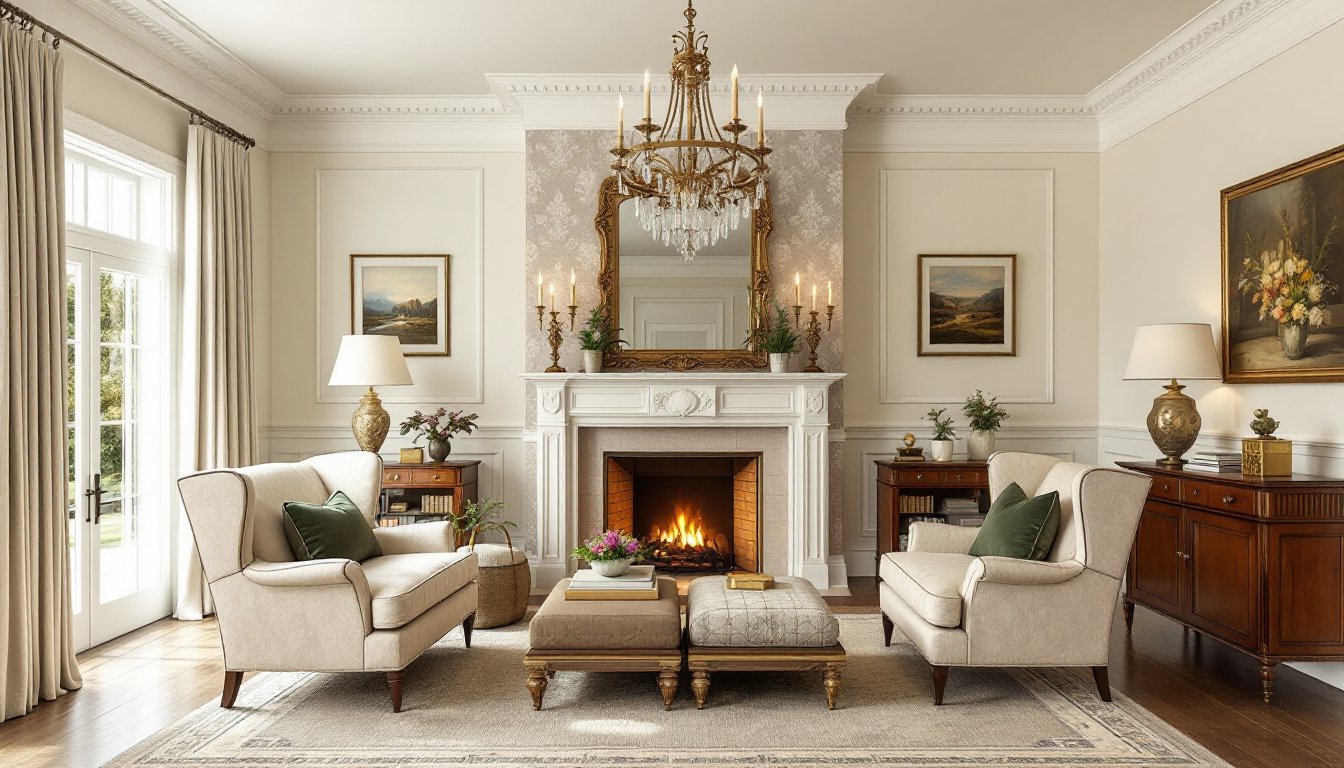
Key traditional furniture pieces include wingback chairs, Chesterfield sofas, roll-arm sofas, secretary desks, and dining tables with pedestal or turned legs. Upholstered pieces should feature natural fabrics, damask, linen, velvet, or quality tapestry, rather than synthetic blends. If you’re building a traditional living room, a sofa anchored by two matching wingback chairs creates that signature balanced look.
Layout in traditional rooms follows a formal arrangement. Rather than angling furniture toward a TV, pull pieces toward a fireplace, artwork, or architectural feature. Create conversation groupings with a sofa and chairs facing each other, a coffee table between them, and a bookshelf or console table behind. This intentional arrangement makes rooms feel purposeful and collected. For specific guidance on room composition, explore Living Room Home Interior Design concepts that emphasize focal points and balanced furniture placement. Avoid scattered, casual arrangements, traditional style thrives on order and symmetry.
Textures, Fabrics, and Decorative Accents
Texture is the secret weapon of traditional design. While the color palette stays neutral, layered textures, velvet, linen, wool, silk, leather, and natural wood, create visual richness and tactile warmth. A room with cream walls, a cream sofa, and cream curtains would feel flat: add a velvet throw pillow, a damask ottoman, a woven rug, and a carved wood side table, and suddenly it feels curated and expensive.
Fabrics should feel substantial and genuine. Heavy linen curtains with proper lining (not flimsy polyester) hang better and age beautifully. Wool area rugs in neutral tones or subtle patterns anchor rooms and define spaces. Leather adds sophistication, a leather wingback chair or ottoman grounds a traditional room instantly.
Decorative accents in traditional design include items that appear collected rather than purchased as a set. Bookshelves display leather-bound volumes mixed with framed photographs, small sculptures, and decorative boxes. Mantels feature brass candlesticks, a large framed mirror, and botanical prints. Table surfaces hold brass lamps with linen shades, ceramic figurines, and fresh flowers in cut-glass vases. The key is restraint, each piece should have visual weight and merit, not clutter. Collections of blue and white porcelain, antique brass hardware, or oil paintings on walls all contribute to that sense of refined history. If you want to explore complementary aesthetic directions, Cozy Cottage Cottage Interior Design shares similar texture-forward and collected-over-time principles.
Lighting and Hardware Details
Lighting in traditional interiors should feel warm and layered. Avoid cold LED bulbs, use warm white (2700K) bulbs in chandeliers, sconces, and table lamps. A traditional room typically includes multiple light sources: an overhead fixture (chandelier or flush mount), wall sconces flanking a mirror or artwork, and table lamps on side tables and desks. This layering allows you to create mood without relying solely on bright overhead light.
Chandeliers are central to traditional lighting. Crystal, brass, bronze, or ceramic fixtures work depending on the room’s character. Avoid anything overly modern or industrial: look for designs with curves, candle-style bulbs, or glass prisms that feel period-appropriate. Dimmer switches are essential, they’re practical and cost relatively little to install if you’re comfortable with basic electrical work (or hire a licensed electrician, which is safer and often required by local codes).
Hardware deserves attention that many DIYers overlook. Cabinet pulls, drawer knobs, and door hinges in brass, oil-rubbed bronze, or antique copper instantly signal traditional style. Swap out modern chrome or stainless steel hardware with classic options, this single change can transform a room’s character without major renovation. Light switch plates and outlet covers in brushed brass or wrought iron also contribute. These are inexpensive, easy swaps and give you authentic detail at minimal cost and effort.
Blending Traditional Design Into Modern Homes
The challenge many homeowners face is bringing traditional style into homes built after 1980, which often feature open floor plans, low baseboards, limited architectural detail, and modern fixtures. The solution isn’t authenticity, it’s intention and layering.
Start by adding architectural details where possible. Crown molding (a carpenter’s miter saw makes clean 45-degree cuts, though hiring a finish carpenter is smarter if you’re uncertain) instantly elevates a space. Wainscoting in a bedroom or dining area grounds a room in traditional character. For renters or those unwilling to commit to permanent changes, tall bookshelves, artwork, and properly scaled furniture create that collected, formal feeling without construction.
Mix traditional elements with thoughtful contemporary touches rather than forcing an entirely period-specific look. A Living Room Home Interior in a modern home might pair a classic sofa with contemporary side tables, or hang a crystal chandelier above a minimalist dining table. This blend prevents your home from feeling like a museum and keeps it livable for modern life. Modern amenities like good WiFi, smart lighting, and quality HVAC systems can coexist with traditional aesthetics when the overall composition prioritizes balance. The goal is classic elegance that doesn’t require you to abandon contemporary comfort. Resources like House Beautiful showcase countless examples of traditional elements thriving in contemporary homes, proving the style remains relevant and flexible.
Conclusion
Traditional interior design endures because it’s built on principles of balance, quality, and timeless beauty, not fleeting trends. Whether you’re renovating an entire home or refreshing a single room, starting with a neutral backdrop, adding layers of texture and pattern, incorporating quality furniture with classic lines, and paying attention to lighting and details will create a space that feels sophisticated, collected, and deeply livable. The style rewards patience and intention, but the payoff is a home that grows richer with time rather than dates itself quickly. Your neighbors will notice, your guests will linger longer, and you’ll find yourself genuinely enjoying the spaces you’ve created.