Colonial Revival interior design brings the refined charm of 18th-century America into modern homes without feeling like a museum piece. This style, rooted in the architectural and decorative traditions of colonial-era homes, merges historical authenticity with today’s comfort and functionality. Whether you’re drawn to symmetrical rooms, warm color palettes, or the craftsmanship of period furnishings, colonial revival offers a timeless framework that works in homes across different regions and sizes. For homeowners tackling their first major interior project or updating a dated space, understanding the core principles of colonial revival design makes it achievable, even on a budget.
Table of Contents
ToggleKey Takeaways
- Colonial revival interior design blends 18th-century elegance with modern comfort and functionality, making it accessible for DIY enthusiasts and budget-conscious homeowners without recreating a museum.
- Essential design elements include white trim, bold dark doors, crown molding, wainscoting, and a warm color palette of creams, warm grays, and muted earth tones like sage green and dusty blue.
- High-impact, budget-friendly updates include swapping hardware, painting in period-appropriate colors, adding shutters, and introducing textiles—all of which can transform a space without major renovation.
- Architectural details such as substantial trim (4-6 inches), chair rails, and properly finished drywall or plaster are what distinguish colonial revival from generic interiors.
- Colonial revival works best when balanced with modern living essentials like updated appliances, contemporary bathroom fixtures, and layered lighting that remain stylistically appropriate.
- Start with one visible room like a dining room or entry hall, prioritize high-visibility areas, and always verify contractor experience with the colonial aesthetic to avoid compromised trim work.
What Is Colonial Revival Interior Design?
Colonial Revival emerged in the late 1800s and early 1900s as Americans revisited and celebrated their heritage. Unlike authentic colonial interiors (which were often sparse and functional), the revival movement romanticized those periods while layering in Victorian comfort and later 20th-century conveniences. The style emphasizes symmetry, craftsmanship, proportion, and a sense of order, think centered doorways, matching windows, and intentional room layouts.
Today’s colonial revival isn’t about recreating a living history museum. It’s about borrowing the structural elegance and restraint of early American homes while keeping things livable. A homeowner might use period-appropriate millwork and paint colors but pair them with modern plumbing, HVAC systems, and contemporary lighting. This flexibility is what makes colonial revival accessible to DIY enthusiasts and budget-conscious renovators.
Key Design Elements and Color Palettes
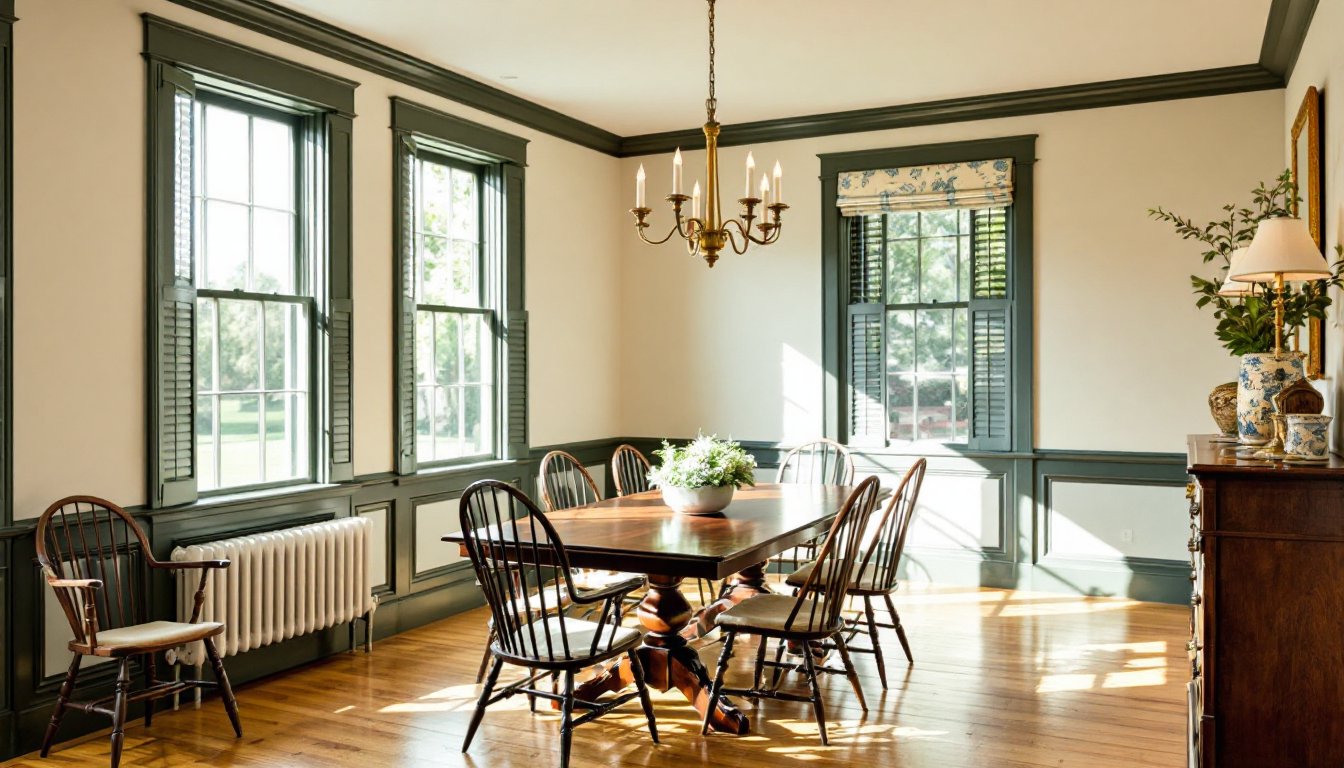
Colonial Revival relies on a few signature design moves: bold black or dark-green doors, white trim, shutters (whether functional or decorative), and architectural details like crown molding, wainscoting, and chair rails. The color palette typically revolves around whites, creams, warm grays, and muted earth tones, think ochre, sage green, dusty blue, and warm red. These colors reflect what was practical and available during the colonial era: natural pigments and whitewash.
One of the easiest entry points is updating trim and millwork. Crown molding, baseboard trim, and door frames are high-impact elements that define the entire character of a room. Standard colonial trim profiles are widely available at big-box stores, and installing them is manageable with basic carpentry skills and the right tools, a miter saw for angle cuts, a nail gun, and careful measuring.
Color choices should be deliberate. Rather than painting every wall in bold shades, colonial revival favors accent walls (often a darker, richer tone) paired with neutral backgrounds. Many homeowners find that consulting resources like This Old House for period-accurate color combinations helps avoid muddy or inauthentic choices.
Classic Furniture and Materials
Furniture in colonial revival spaces emphasizes solid wood, cherry, maple, and mahogany, with turned legs, raised panels, and minimal upholstery in linen or wool. Pieces don’t need to be genuine antiques: quality reproductions from furniture makers specializing in colonial styles are widely available and often more durable and comfortable than originals. Look for construction details: mortise-and-tenon joints, hand-carved details, and joinery that feels sturdy.
Hardware, drawer pulls, hinges, brass knobs, deserves attention. Period-appropriate hardware in brass or iron reinforces the style throughout a room. Hardware swaps on existing cabinets or dressers are quick updates that yield disproportionately large visual impact. Textiles like toile, small-scale prints, and solid linens in cream, blue, or burgundy add warmth without clashing with the overall aesthetic.
Flooring, Walls, and Architectural Details
Wide-plank hardwood flooring, or convincing reproductions, is the gold standard for colonial revival spaces. If you’re refinishing existing floors, aim for a warm honey or amber stain rather than dark ebony: this reads more authentically colonial. Hardwood installation requires professional help (nailing hardwood to joists must be done correctly to avoid squeaks and gaps), but finishing and staining are manageable DIY tasks if the floor is already laid.
Walls in colonial spaces were often plaster (and remain so in many historic homes). Modern drywall works fine if finished and painted properly. The key is using paint with slight sheen, eggshell or satin finish, rather than flat, which reads as contemporary. Avoid ultra-matte finishes: they can look flat and lifeless.
Architectural details separate colonial revival from generic interiors. Wainscoting, horizontal wood paneling that covers the lower third of a wall, is iconic. Modern wainscoting is often installed as beadboard (boards with a rounded groove) or shiplap, topped with a chair rail (a horizontal molding at roughly 36 inches from the floor). Both are manageable DIY projects with a miter saw, stud finder, level, and quality adhesive. Many homeowners underestimate prep work: walls must be smooth, studs must be located and marked, and everything must be level before installation begins.
Door trim and crown molding complete the picture. Colonial Revival interiors feature substantial trim, typically 4 to 6 inches tall for baseboards and crown molding. Thinner, skimpy trim reads modern and undercuts the style. When installing trim, remember that nominal lumber sizes (like 1×4 or 1×8) are actually smaller once milled, a 1×4 is roughly 3.5 inches wide. Plan accordingly and use quality wood filler for gaps and nail holes.
How to Incorporate Colonial Revival Into Your Home
Start with what you have. Most homes can accommodate colonial revival elements without gut renovation. Begin with one room, a dining room or entry hall, where the impact is immediate and the scope is manageable. Paint walls in a colonial palette, add trim if budget allows, and furnish with a few well-chosen pieces.
Prioritize high-visibility areas. The entry, dining room, and primary bedroom benefit most from colonial details because they’re where style is immediately apparent. Kitchens and bathrooms can lean into the aesthetic too, though plumbing and electrical requirements may limit historical accuracy.
Budget-friendly tactics include repainting existing furniture, swapping hardware, adding shutters (even non-functional ones), and introducing textiles in period-appropriate patterns. A fresh coat of paint in a warm white (avoid stark pure white) on cabinetry or existing built-ins is transformative. For paint, expect 300–400 square feet of coverage per gallon of quality interior paint: prep surfaces thoroughly with primer if covering darker colors.
When working with a contractor on larger projects like wainscoting, crown molding, or hardwood flooring, ask for references and verify they understand the colonial aesthetic. Sloppy trim work stands out immediately and can’t be hidden with decor.
Balancing Historical Style With Modern Living
Colonial Revival works best when it enhances function rather than fighting it. Modern appliances, open shelving in kitchens, and contemporary bathroom fixtures are perfectly acceptable, even necessary, within a colonial framework. The trick is choosing designs that don’t scream “2025.”
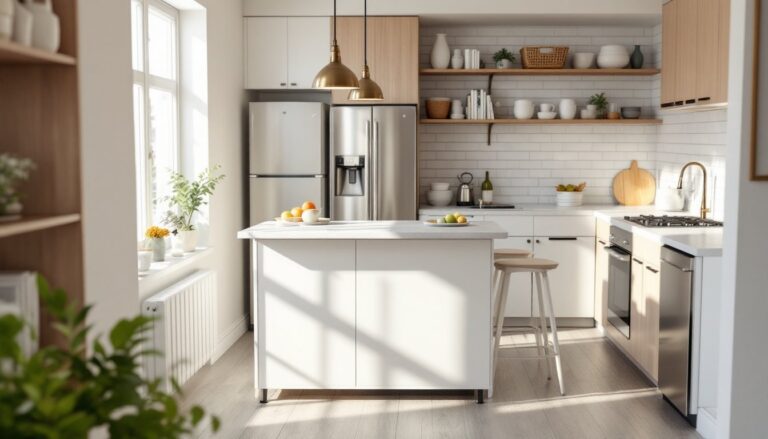
For kitchens, shaker-style cabinetry (simple, flat-panel doors) fits colonial revival beautifully and accommodates modern hardware and appliances. Subway tile backsplashes are neutral and period-compatible. Resources like Freshome offer inspiration for blending colonial interiors with updated kitchens and baths.
Lighting deserves thought. Chandeliers, sconces, and lantern-style fixtures in brass or oil-rubbed bronze feel appropriate. Recessed lighting is fine hidden above crown molding or in soffits: it just shouldn’t be the primary light source. Layering lighting, overhead, task, and ambient, is both functional and stylistically sound.
Storage and modern conveniences like entertainment systems can coexist with colonial style if thoughtfully integrated. Built-in cabinetry, closed shelving, or period-style armoires hide modern clutter. Dining Room Interior Design often incorporates built-in hutches that serve both function and aesthetics, a perfect marriage of colonial style and practical storage.
Remember that colonial revival is adaptable. A farmhouse cottage in Maine looks different from a colonial home in Virginia or Georgia, and neither needs to match a museum standard. Your version should reflect your home’s architecture, climate, and how you actually live.
Conclusion
Colonial Revival interior design offers homeowners a proven framework for creating spaces that feel thoughtful, grounded, and elegant. By starting with architectural details like trim and color, then layering in appropriate furniture and textiles, you can transform a house into a home with genuine character. The style rewards planning and prep work, measure twice, paint once, and don’t skip the primer, but it’s entirely achievable without hiring a designer. Whether you’re fully committing to the look or simply borrowing its best elements, colonial revival gives you the tools to create a home that looks and feels timeless.