Modern Georgian interior design blends the sophisticated symmetry and refined details of 18th-century Georgian architecture with today’s comfort and functionality. This style doesn’t demand historical accuracy, it borrows the best: graceful proportions, decorative moldings, and formal arrangement, then strips away the stuffiness. Homeowners drawn to this aesthetic want spaces that feel both elevated and livable, with enough personality to avoid looking like a museum. Whether you’re renovating a period home or bringing Georgian elements into a contemporary space, the approach remains practical: start with bones (architecture and proportion), layer in classic furniture, and finish with light and accessories that make the style feel current.
Table of Contents
ToggleKey Takeaways
- Modern Georgian interior design blends 18th-century elegance with contemporary comfort by keeping symmetrical proportions and architectural details while eliminating heavy formality and embracing natural light.
- A restrained color palette of soft whites, creams, and muted earth tones like sage green and dusty blue forms the foundation, allowing architectural details and carefully curated accessories to stand out.
- Structural elements like crown molding, chair rails, wainscoting, and hardwood floors establish Georgian style most effectively, costing $100–$300 per linear foot for custom built-ins but delivering 60% of the visual impact.
- Furniture arrangement should be formal but functional, with seating grouped symmetrically around focal points like fireplaces, and layouts anchored by quality area rugs in neutral tones.
- Thoughtful lighting through chandeliers scaled appropriately for table size, wall sconces with dimmers, and large mirrors that reflect light transforms a room from stuffy period home to a graceful, livable modern Georgian space.
- Painting, furniture rearrangement, and accessory styling are DIY-friendly updates you can handle yourself, while finish carpentry and structural changes should be left to professionals for authentic results.
What Defines Modern Georgian Interior Design
Georgian design emerged in England between 1714 and 1830, spanning the reigns of four King Georges. The style is rooted in classical symmetry, proportion, and restraint. What sets modern Georgian apart is intentionality: you keep the visual order and elegance but drop the heavy drapes, dark woods, and rigid formality that made period homes feel cold.
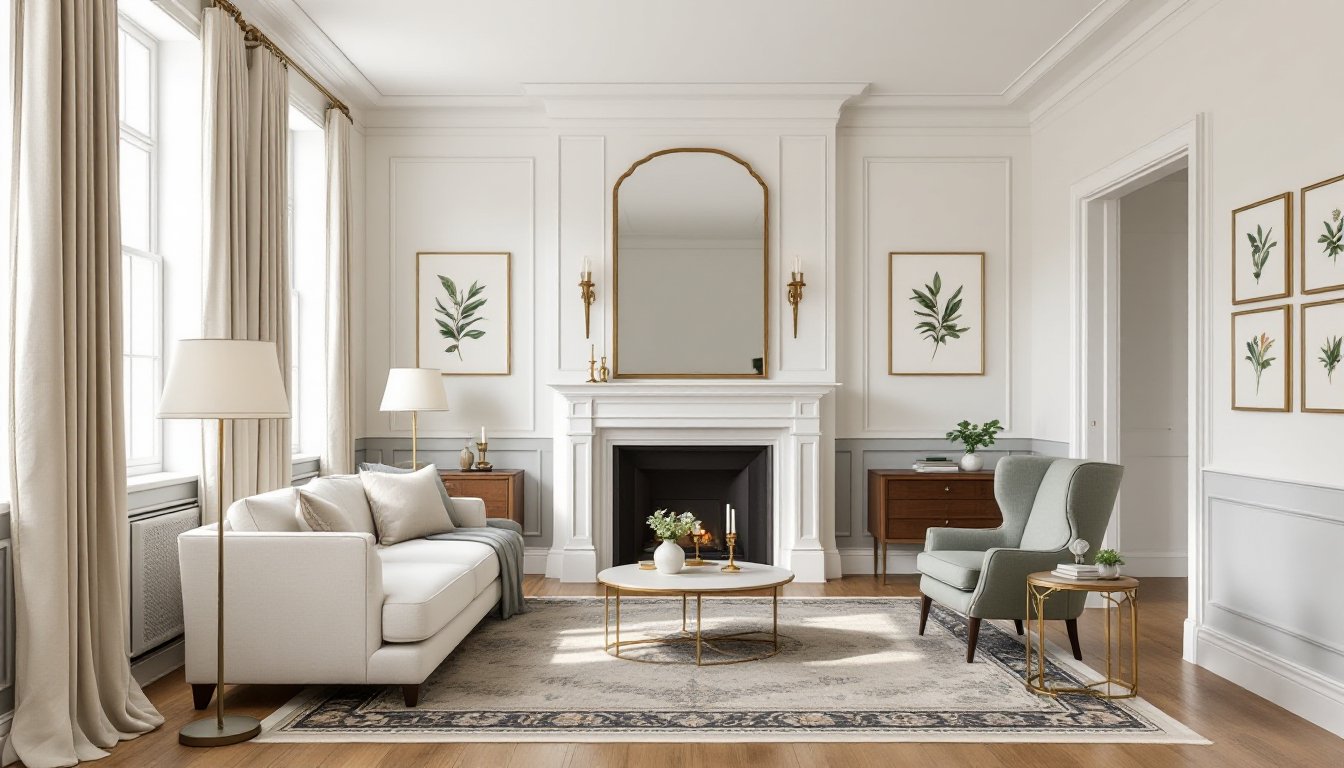
The hallmark of Georgian is balance. A fireplace sits centered on a wall, flanked by matching windows or built-ins. Doorways align symmetrically. Baseboards, crown moldings, and wainscoting follow clear, geometric lines. This formal framework actually gives you permission to relax: once the architecture is solid, you can furnish more loosely, introduce color, and layer textures without the space feeling chaotic.
Modern Georgian also respects light. Historical Georgian homes were lit by candles and oil lamps: today’s version welcomes generous windows, light-colored walls, and thoughtful artificial lighting. This shift alone transforms the mood from “estate library” to “graceful, livable home.” The style works especially well if you’re starting with good bones, original hardwood floors, plaster moldings, or tall ceilings, but it’s entirely possible to introduce Georgian elements into a standard suburban home through thoughtful material choices and arrangement.
Key Design Elements and Color Palettes
Georgian interiors rely on a restrained palette and repeated visual elements. The most common foundation is soft, warm whites and creams paired with muted earth tones: sage green, warm gray, dusty blue, or terracotta accents. These aren’t bold statements, they’re backgrounds that let architectural detail shine. Many modern Georgian homes use white or cream for main walls and darker, richer tones for trim, doors, or a feature wall. Avoid stark modern white: instead, opt for off-whites with warm undertones like ivory or linen.
Geometric patterns appear frequently: striped wallpaper, checkerboard floors, or small-scale florals echo the period without feeling costume-like. The key is subtlety. A single accent wall in a muted damask pattern or narrow stripe works better than covering all four walls.
Architectural Features and Materials
The physical structure of a Georgian room speaks louder than any decoration. Load-bearing walls aside, living room home interior design often relies on non-structural elements like wainscoting, chair rails, and crown molding to establish the style. A chair rail (typically 30–36 inches from the floor) divides the wall into two zones, often painted different colors, lighter above, deeper below.
Wood is essential but doesn’t need to be antique. Hardwood floors (oak, walnut, or maple in nominal 3/4-inch thickness) are ideal: if you have concrete or particle board, quality laminate or vinyl plank that mimics wood grain works. Paint any new trim with quality trim paint in semi-gloss or satin finish: these hold up better than flat and reflect light subtly.
Built-in bookcases, fireplace surrounds, and door casings anchor the room visually. If your home lacks these, you can install simple shelving with matching crown and base trim to suggest the Georgian framework. This is millwork-level carpentry: unless you’re confident with a miter saw and finish nails, hire a finish carpenter. Costs vary widely by region and wood quality, but expect $100–$300 per linear foot for custom built-ins.
Plasterwork details, ceiling medallions, rosettes around light fixtures, or decorative cornices, add authenticity without major structural work. Pre-cast polyurethane or composite trim is affordable ($20–$100 per piece) and easy to install with construction adhesive and finish nails. Real plaster repair requires a specialist and isn’t a DIY task.
Furniture and Layout Principles
Georgian furniture tends toward straight lines, tapered legs, and timeless silhouettes. Think Chippendale, Queen Anne, and Hepplewhite styles, or modern reproductions that echo these proportions. The beauty of modern Georgian is that you don’t need authentic 18th-century pieces: contemporary furniture with clean, classic lines (no chunky arms or ultra-low seats) fits seamlessly.
Layout is formal but functional. In a living room, furniture faces a focal point, typically the fireplace or a feature wall. Seating is often arranged in conversation groupings rather than floating in the middle of the room. Sofa and chairs should sit on quality area rugs that define the space and add softness underfoot: traditional choices include Persian, dhurrie, or flatweave designs in neutral or muted colors.
Similarly, dining room interior design benefits from centering a dining table beneath a chandelier, with matching chairs (or a mix of chairs and benches) arranged symmetrically. A sideboard or china cabinet on one wall balances the composition. Avoid clutter: Georgian style favors curated, displayed objects over scattered decoration.
Color coordination matters more than matching. If your sofa is cream linen, accent chairs might be in muted blue or sage, with throw pillows picking up both colors plus a small-scale pattern. The principle is harmony through repetition of a few tones, not rainbow variety. Textures, velvet, linen, wool, layer visual interest without introducing new colors.
Lighting and Accessories for Georgian Spaces
Lighting is where modern Georgian shines. Chandeliers, crystal, brass, or candlestick-style, are traditional, but what matters is scale and placement. A chandelier should hang 30–36 inches above a dining table and be sized to roughly one-half to two-thirds the table’s width. If a room lacks a center ceiling fixture, install one: this often requires running new electrical wiring and may need a licensed electrician depending on your local electrical code and the complexity of your home’s existing wiring.
Wall sconces flanking mirrors or fireplaces add symmetrical light and architectural interest. Pair them with a dimmer switch so you can adjust ambiance without harsh overhead brightness. Table lamps on side tables or consoles should be brass or ceramic with cream or white shades, nothing frosted or colored.
Accessories deserve restraint. A mantelpiece might display a clock, candlesticks, and a mirror rather than twenty framed photos. Bookshelves hold books spines-out, with a few decorative objects (a vase, a small sculpture, a globe) interspersed. Windows can be dressed with full-length linen curtains in cream or a muted tone: the style favors simple panels rather than heavy swags or valances.
Painting and mirrors are Georgian staples. A large mirror opposite a window bounces light and expands the room visually. Landscapes, botanical prints, or portraits in simple frames hang symmetrically, centered above a console, or in a grid pattern on a feature wall. Avoid gallery walls of mismatched sizes: modern art deco interior styles embrace eclecticism, but Georgian prefers order.
Bringing Modern Georgian Design to Your Home
Start with assessment. Do you have original moldings, fireplaces, or hardwood floors? These are your foundation. If not, you can introduce Georgian character through paint, new trim, and careful furniture placement, it’ll simply feel more contemporary Georgian than period-authentic.
Prioritize in stages. First, tackle walls and trim: repaint in a Georgian-appropriate color, add or repair crown molding and baseboards, and install a chair rail if the room’s proportions support it (typically rooms 9 feet tall or higher). This structural layer is 60% of the impact and requires skill and patience but is the most cost-effective upgrade.
Next, address focal points. Arrange furniture to anchor the room, center a seating area on a fireplace, position a dining table under a chandelier, or create a library arrangement around a built-in bookcase. This is free if you simply rearrange: it’s transformative.
Finally, layer in soft furnishings and accessories. Rugs, curtains, lamps, and artwork are the easiest to adjust if you change your mind. Choose a color palette (three to five tones max), stick to it, and let texture do the work. Websites like Decoist and Freshome showcase Georgian and traditional interiors: use them as inspiration for color combinations and accessory styling.
Be honest about what’s worth hiring out. Structural changes (load-bearing walls, major electrical work) and finish carpentry (built-ins, crown molding installation) are best left to professionals. Painting, furniture arrangement, and styling you can absolutely do yourself. Home interior design ideas sites often feature DIY-friendly updates, but remember: prep work (filling nail holes, priming, sanding between coats) separates a professional finish from an amateurish one.
Conclusion
Modern Georgian interior design succeeds because it balances formality with livability. You get the sophistication and visual order of an 18th-century aesthetic without the stuffiness. By respecting proportion, choosing a muted palette, investing in good bones (molding, flooring, lighting), and furnishing thoughtfully, you’ll create a space that feels both timeless and unmistakably yours. The style rewards restraint and careful layering over trends, making it a smart choice for homeowners who want their interiors to endure.