Minecraft isn’t just about mining resources and defeating mobs, it’s a canvas for creative expression. Whether you’re building a survival world home or a creative mode showpiece, interior design transforms a hollow box into a space that actually feels lived-in. The difference between a sparse shelter and an inviting room often comes down to thoughtful block choices, color coordination, and smart lighting. This guide walks you through practical Minecraft interior design strategies that work on any budget and in any play style, using blocks you likely already have on hand.
Table of Contents
ToggleKey Takeaways
- Simple minecraft interior design transforms bare builds into lived-in spaces through intentional block placement, color coordination, and strategic lighting rather than rare materials.
- Stick to cohesive color palettes of 2-4 main colors with complementary blocks—warm tones feel cozy, cool tones feel modern, and neutral palettes provide flexibility for accents.
- Layer multiple light sources like lanterns, campfires, and hidden lighting to create ambient depth and warmth; harsh torches alone produce a flat, utilitarian feel.
- Organize storage visually as a design feature by building display walls with labeled chests and shelves, making resource management both functional and aesthetically intentional.
- Add personality through small details like rugs, paintings, banners, nightstands with lanterns, and armor stands that signal a space is decorated rather than just functional.
- Test your minecraft interior design lighting at different times of day, as nighttime requires more luminescence to achieve the same inviting effect as daytime builds.
Why Interior Design Matters in Minecraft
Your Minecraft home is more than shelter, it’s your base of operations and a reflection of your building style. Good interior design improves navigation, makes resource storage logical, and creates an environment that’s genuinely pleasant to spend time in. A well-designed interior also makes your world feel more immersive and personal. You’re more likely to stay invested in a world when your base feels like home rather than a bare stone box. Design doesn’t require rare materials or complex redstone: it’s about intentional block placement, color harmony, and understanding how light and shadow work in the game. Even in survival mode with limited resources, smart choices in block selection and layout create visual impact. Think of it like real home improvement, prep work and planning matter more than expensive materials. Players who invest time in interior design report enjoying their worlds longer and being more motivated to expand their builds. It’s the difference between a base you use and a base you love.
Essential Building Blocks for Minecraft Interiors
Choosing Color Palettes That Work
Color is the fastest way to transform a space from dull to inviting. Rather than mixing every block type available, stick to a cohesive palette of 2–4 main colors plus accents. Warm palettes (oak wood, terracotta in tan/orange, yellow wool) feel cozy and inviting. Cool palettes (dark oak, blackstone, blue terracotta) feel modern and sophisticated. Neutral palettes (spruce, gray concrete, stone) provide flexibility for accent colors.
Consider pairing complementary blocks: oak and dark oak create contrast, while stone and blackstone feel industrial. Modern Home Interior design principles apply here too, restraint often looks better than chaos. Avoid the temptation to use every block in your inventory. Instead, choose a primary block (wall), secondary block (accents and trim), and one or two accent blocks for details.
Block texture matters as much as color. Smooth blocks (concrete, polished stone) feel sleek. Rough blocks (raw wood logs, gravel) feel rustic. Mixing textures creates visual depth without adding more colors. For example, white concrete walls with oak wood trim and dark oak furniture creates a clean, Scandinavian feel. A spruce room with terracotta accents reads as warmer and more traditional.
Don’t overlook half-blocks and stairs, they’re essential for edge detail and scale. A room framed with wooden stairs or stone stairs along the baseboards reads more intentional. Slabs break up large flat areas and prevent monotony. A ceiling made entirely of one block reads flat: adding a strip of contrasting slabs or a trim line instantly lifts the design.
Room-by-Room Design Tips
Living Spaces and Common Areas
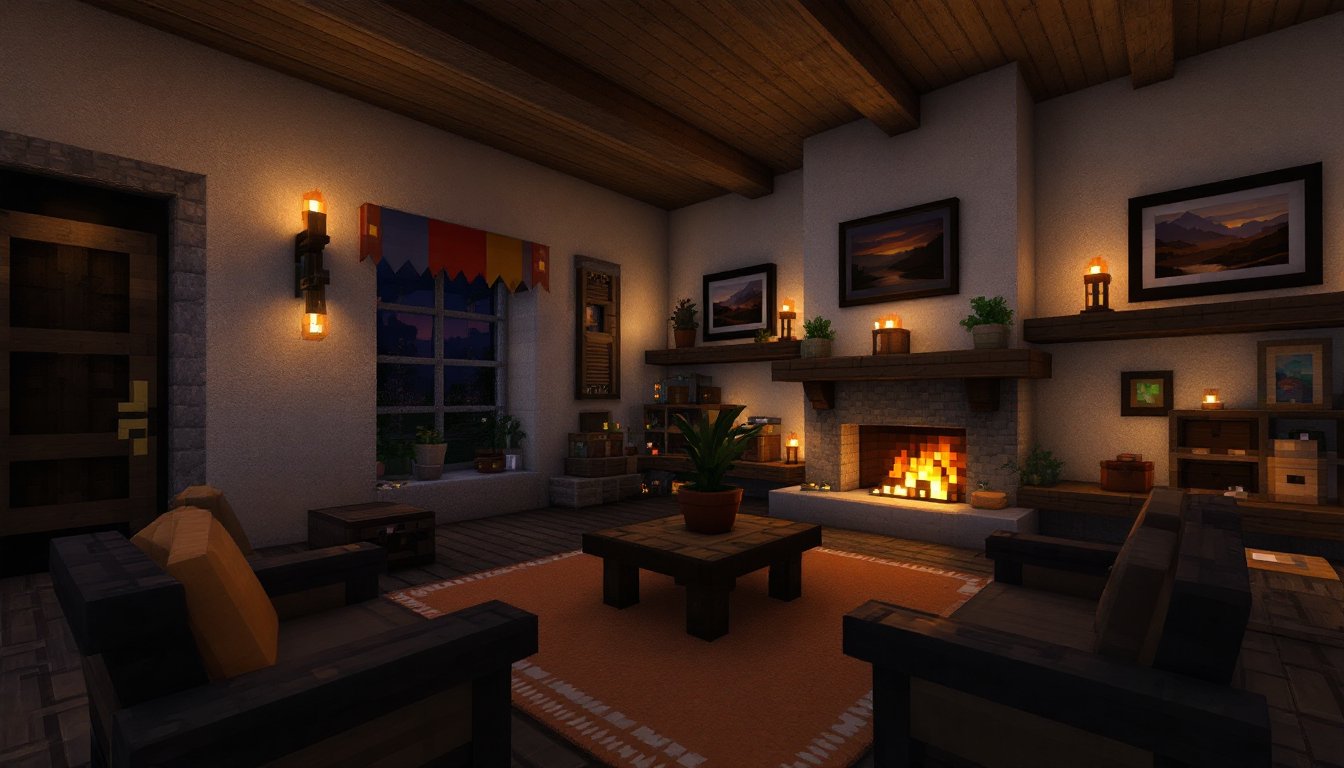
Living Room Home areas are where players spend the most time, so functionality and comfort should drive layout. Start with a clear focal point, a fireplace, seating area, or feature wall. A fireplace made from dark oak or blackstone with netherite bars (for a modern look) anchors the room. Arrange seating around it: carpet squares, stairs, and slabs work as furniture.
Storage should be visible but organized. Rather than hiding chests in a corner, build a wall of chests with different wood types as a feature, labeling them with item frames or signs. This makes resource management intuitive and looks intentional. Add shelving above storage using dark oak stairs or spruce slabs to display decorative items, plants in pots, armor stands, books, or framed art made from item frames.
Lighting is everything in common areas. Lanterns and campfires feel warmer than harsh torches. Place them in corners, on shelves, and behind half-blocks to create pools of light rather than a uniformly bright room. This depth feels more inviting. Paintings and banners add color and personality without requiring rare blocks. A well-placed painting becomes a focal point: a banner hung in a corner signals that a space is decorated, not just functional.
Bedrooms and Private Spaces
Bedrooms benefit from coziness. A bed is obvious, but surround it thoughtfully. Nightstands made from small tables (crafting tables or lecterns) next to the bed, with a lantern on top, feel homey. A rug (carpet or wool) defines the sleeping area and softens the room. Wall art, paintings, banners, or a feature wall in a secondary color, prevents blank walls.
Storage in bedrooms can be more hidden than common areas. Chests under the bed, in closets, or behind curtains keep the space feeling restful rather than cluttered. Curtains made from wool or terracotta blocks frame windows and control light. Use trap doors as window shutters for a finished look. Cozy Cottage Cottage Interior design techniques work well here, soft colors, layered textures, and intentional lighting create a retreat atmosphere.
Dining areas work well as extensions of kitchens or common rooms. A table made from stairs and slabs (or a crafting table as a simple alternative) with chairs arranged around it creates a gathering space. Lanterns hung above or on walls provide task lighting. A feature block, like a bold terracotta color or wood type, on one wall makes the dining area feel distinct. Bookcases, barrels, or shelves along walls add texture and suggest the space is lived-in rather than sterile.
Lighting and Ambiance Techniques
Lighting transforms mood more than any other single design element. Torches are functional but harsh, they create a flat, utilitarian feel. Lanterns feel warm and intentional. Campfires and soul campfires emit softer light with a cozy glow. Soul lanterns cast a blue light that’s perfect for modern or magical spaces. Strategic placement matters: hidden lighting behind half-blocks, under stairs, or inside wall sconces creates ambient light rather than glare.
Layering light sources prevents monotony. Combine ceiling lights with corner lanterns and a fireplace for depth. Dark corners are intentional design, not flaws, they create contrast that makes lit areas feel warmer. A bedroom with only one corner lit feels cozy: a bedroom with uniform brightness feels sterile.
Don’t overlook non-light sources for ambiance. Interior Design Ideas extend beyond light fixtures. Carpet creates warmth underfoot. Rugs define spaces. Banners add color and movement. Armor stands in the corner dressed in equipment read as decorative. Small details, barrels used as planters, cauldrons with potions, item frames with maps or tools, make rooms feel authentic and lived-in.
Color temperature matters too. Warm tones (orange terracotta, yellow wool) paired with warm lighting feel inviting. Cool tones (blue terracotta, cyan concrete) with cool lighting feel modern. Mixing warm and cool lighting in the same room creates visual conflict unless done intentionally for contrast. Many builders find success with a warm primary light source (fireplace, lanterns) and subtle cool accents for complexity. This reflects real interior design principles where layered lighting creates professional, inviting spaces.
Test your lighting at different times. Nighttime Minecraft is darker: what looks bright during day might be too dim at night. Build confidence with one well-lit room before expanding your design vocabulary. Reference real design inspiration from sources like Curbly and Hunker for lighting and color ideas you can adapt to Minecraft blocks.