Log cabins have a timeless appeal, solid wood walls, natural light filtering through small windows, and that unmistakable scent of pine. But making a small log cabin feel genuinely livable requires more than just admiring those logs. Interior design in a compact cabin means balancing authentic rustic character with smart space planning and comfort. Whether you’re renovating an existing cabin or decorating one from scratch, the goal is creating an interior that feels both warm and functional. This guide walks you through proven strategies to make your small log cabin feel less cramped and more like the cozy retreat you imagined.
Table of Contents
ToggleKey Takeaways
- Small log cabin interior design succeeds by showcasing exposed logs with warm finishes and neutral trim colors rather than hiding wood elements that serve as natural décor.
- Multi-functional furniture pieces like storage benches and under-bed drawers are essential in compact cabins to balance comfort with efficient space planning.
- Layered lighting at multiple levels—ambient, task, and accent—is critical since log cabins typically have small windows and thick walls that reduce natural light.
- Natural fabric textiles including wool, linen, and cotton area rugs (5×8 or 6×9 feet) add warmth and sound absorption while softening the acoustic hardness of log construction.
- Limit accent colors to two or three earth tones like sage green, burnt orange, and warm brown to create a cohesive color palette that enhances the warmth of wood walls.
- Vertical storage solutions such as wall-mounted shelving, built-ins, and over-door organizers maximize space without eating valuable floor area in a small cabin.
Embrace Warm, Natural Wood Features
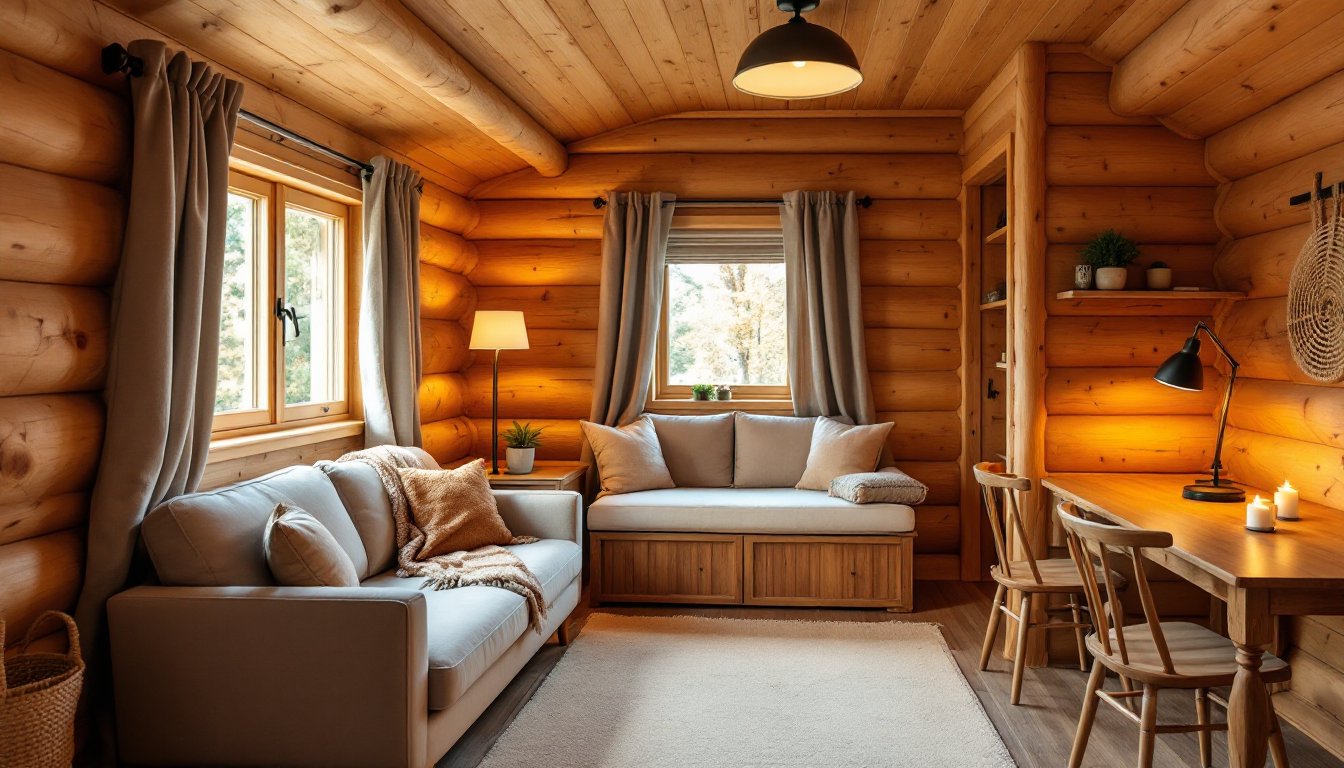
The wood walls are your starting point, not something to hide. In a small log cabin, exposed logs are your décor. Keep them clean and sealed, a matte or satin finish preserves that natural patina without making the space feel closed-in. Don’t fight the wood grain and color variations: they add visual texture that actually makes small rooms feel more interesting.
Where you have interior framing, consider exposed beam ceilings if the structure allows. A 2×8 or 2×10 beam (actual dimensions roughly 1.5″ × 7.25″ or 1.5″ × 9.25″) runs across the room and draws the eye upward, making low ceilings feel taller. If structural beams aren’t in the cards, decorative beam covers work for a subtle touch.
Keep wall clutter minimal. Your logs are doing the heavy lifting visually. Paint trim and interior walls a neutral shade, warm whites, soft grays, or pale cream, so the wood remains the focal point without overwhelming the space.
Choose a Cohesive Color Palette That Enhances Warmth
Once you’ve decided to showcase the logs, limit your accent colors to two or three maximum. Warm earth tones, burnt orange, sage green, warm brown, and deep rust, complement log interiors naturally. Avoid cool grays or sterile whites: they fight against the warmth the logs provide.
Paint is one of the fastest ways to change feel. A warm primer underneath ensures coverage and prevents tannins in the wood from bleeding through onto lighter trim. One gallon of quality paint covers roughly 350–400 square feet depending on application and surface porosity, so measure your walls before buying.
For a cohesive look, carry your palette through soft furnishings. If your walls are warm ivory, choose curtains, throws, and pillows in complementary earth tones. Cozy cottage interior design shares similar principles, restraint and warmth working together create that “just right” feeling.
Select Furniture That Balances Comfort and Space Efficiency
Small cabins demand furniture that earns its place. Choose pieces that sit lower to the ground, a sofa roughly 32–36 inches tall makes a small room feel airier than high, overstuffed furniture. Avoid bulky sectionals: instead, pair a modest two-seater sofa with a low-profile armchair and a side table.
Measure your doorways and stairwells before buying. You’ll want to verify furniture fits through entries, a standard interior door in most cabins is 32 inches wide, and many log cabins have tighter spaces. Opt for pieces without skirts or legs if you can: they feel lighter visually and are easier to clean under.
Wood furniture that complements the logs works best. A modest wooden dining table, sturdy cabin-style chairs, and a low bookcase in natural finish create visual continuity. Avoid metal-frame or glass-top pieces that feel cold against warm wood walls.
Multi-Functional Pieces for Compact Layouts
Storage benches with hinged lids serve as extra seating, tables, and hidden storage in one go. A bed frame with under-storage drawers keeps linens and off-season gear out of sight. Wall-mounted shelves above desks or in alcoves add storage without eating floor space. Look for pieces that do double or triple duty, but resist the urge to cram them in, negative space is just as important as furniture in feeling spacious.
Layer Lighting for Ambiance and Functionality
Log cabins often feel darker than modern homes because of small windows and thick walls. You need light at multiple levels: ambient (overall brightness), task (reading, cooking), and accent (mood-setting).
Start with ambient lighting. Recessed ceiling fixtures work well if you have the ceiling height, but a simple ceiling-mounted dome fixture with a warm-white bulb (2700K color temperature) is cheaper and effective. Add 2–3 table lamps on dressers or end tables, warm brass or wood bases blend seamlessly with cabin style.
Task lighting is non-negotiable near work zones. A small space kitchen needs under-cabinet lights: bedroom reading requires a focused bedside lamp. For a desk or craft area, a gooseneck desk lamp directs light where you need it without spilling across the whole room.
Accent lighting adds character. Small battery-operated LED candles in rustic holders, or a single pendant light over a small bar area, create focal points and warmth without wiring complexity. Dimmers on main fixtures let you shift ambiance from bright-and-functional to dim-and-cozy as evening falls.
Incorporate Textiles and Cozy Accents
Textiles soften the hard lines of log construction. Throw blankets, area rugs, and curtains introduce color, warmth, and sound absorption that small cabins desperately need. Log walls are beautiful but acoustically hard, a couple of good rugs and upholstered pieces prevent echoing and make the space feel cozier.
Choose natural fabrics: linen, wool, and cotton hold up better than synthetics and age beautifully. An area rug in 5×8 or 6×9 feet anchors a living area without oversizing a small room. Layer throw blankets in earth tones across sofas: they’re affordable, easy to wash, and signal “come sit and stay awhile.”
Curtains serve practical and visual roles. Heavy thermal-lined panels insulate against drafts and cold, which small cabins are prone to. They also darken rooms for better sleep. Hang them floor-to-ceiling to make ceilings feel higher. Avoid heavy velvet unless your cabin has generous headroom: linen or linen-blend curtains feel lighter.
Small accents matter. Leather or sheepskin pillows, a woven wall hanging, or even a living room home interior design approach that layers textures, burlap, flannel, faux fur, transforms a bare cabin into an inviting retreat. Stick to your color palette so these pieces read as intentional, not cluttered.
Maximize Storage Solutions in Tight Spaces
Small cabins have limited closet space and often odd corners. Vertical storage is your best friend. Wall-mounted shelving above doorways, in alcoves, or on awkward wall segments keeps belongings visible and organized without taking up floor area.
Built-ins work wonders if you can swing them. A simple wooden bench seat with storage beneath along one wall creates seating and conceals gear in one move. Measure studs (typically spaced 16 inches on center) and use 2×4 lumber to create frame structures: a licensed carpenter can handle this if you’re not comfortable with framing. For renters or temporary setups, tall narrow bookcases or wire shelving units pushed into corners do the job without permanent changes.
Under-bed storage containers slide out when needed and tuck away out of sight. Use clear plastic bins so you can see contents at a glance. Over-door shoe organizers work for more than shoes, they hold cleaning supplies, craft materials, or socks.
Be ruthless about what stays. Small spaces expose clutter immediately. Every item should either be functional, beautiful, or both. Keep surfaces clear: a bedside table with just a lamp and a book feels restful: the same table crowded with five items feels chaotic. Dedicated storage, hooks for coats, a basket for blankets, a narrow shelf for cookbooks, prevents surfaces from becoming dumping zones.